MT-2 • Melanotan 2 • Vietnam • Research information

MT-2 in Vietnam

MT-2, also known as Melanotan 2, is a melanocortin peptide commonly researched for pigmentation, tanning response, melanocortin receptor activity, appetite signaling, and sexual-function pathways.

Most people know MT-2 because of tanning discussions, but the science is broader than “get darker.” It interacts with melanocortin receptors, which are involved in skin pigment, appetite, and sexual signaling. Biology rarely gives one molecule only one job. Apparently that would be too convenient.

01
Commonly researched for pigmentation and melanocortin receptor activity.
02
Frequently discussed in tanning-response and UV-sensitivity research models.
03
Also discussed for appetite and sexual-function signaling pathways.
MT-2 Melanotan 2 peptide vial
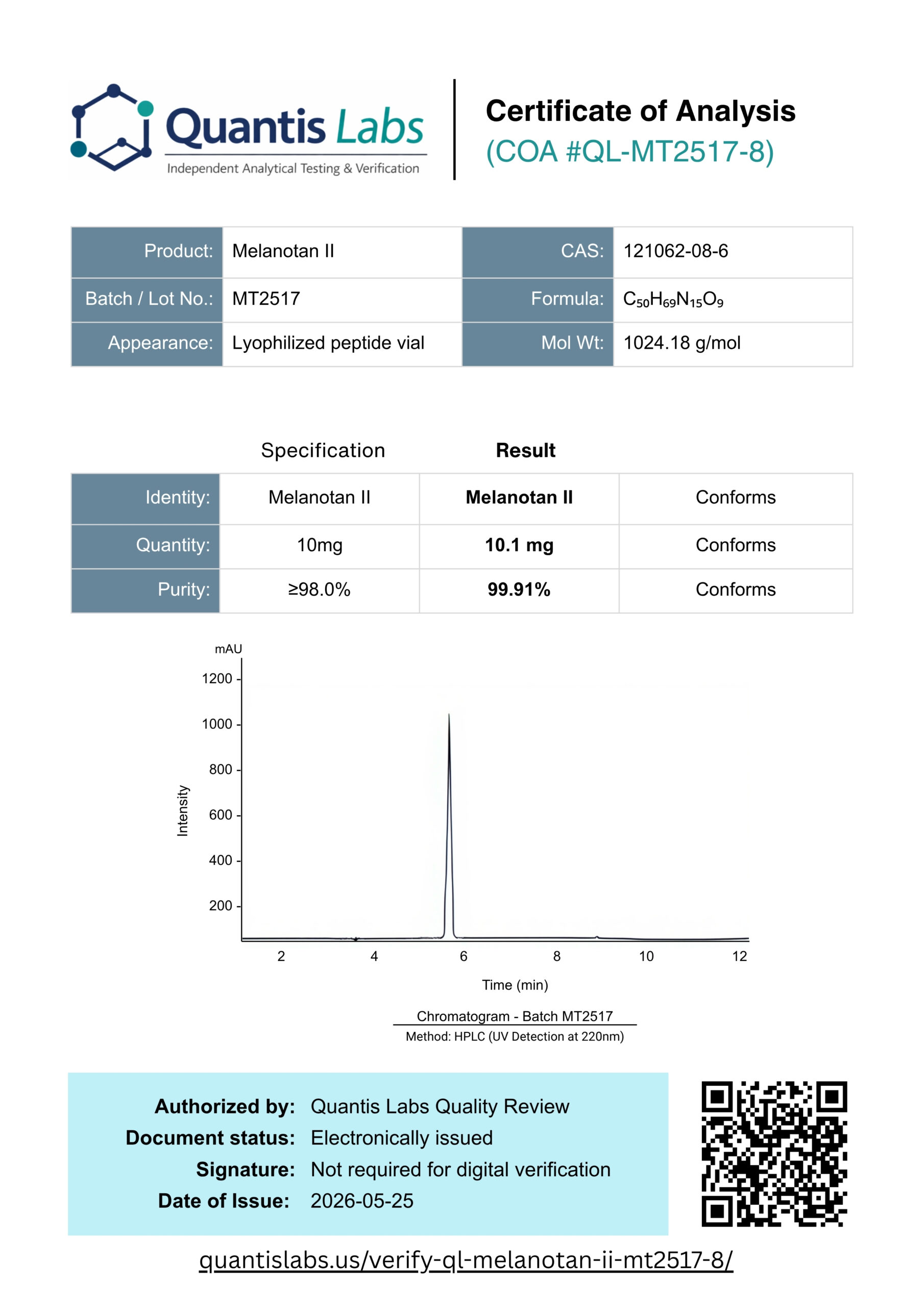
Scan to view COA
MT-2 Melanotan 2 COA QR code
Research Overview

Why researchers are interested in MT-2

MT-2 is studied because it activates melanocortin receptors. These receptors are involved in pigmentation, appetite regulation, energy balance, and sexual signaling. That is why MT-2 appears in several different research conversations rather than only skin-pigment research.

01

Pigmentation research

MT-2 is commonly discussed for its relationship to melanin production and tanning-response models.

02

Melanocortin receptors

Researchers study MT-2 because it interacts with melanocortin receptors, especially pathways linked to skin pigment and sexual signaling.

03

Appetite and libido research

MT-2 is also discussed for appetite suppression and libido-related effects because melanocortin receptors are involved in more than skin color.

Reference Pricing

Common MT-2 research formats in Vietnam

Pricing below is listed as Vietnam reference pricing for research-use formats. Availability, batch verification, and sourcing may vary.

MT-2

10mg vial
$20 500,000₫

BAC Water

10mL vial
$5 125,000₫
Common Research Protocols

Common MT-2 research-dose discussions

MT-2 is usually discussed in microgram ranges. Research conversations often separate lower introductory amounts from higher pigmentation-focused discussions because side effects can become more noticeable as exposure increases.

Research Focus Commonly Discussed Range Notes
Introductory research 50-100mcg Often discussed as a cautious starting range.
Pigmentation research 100-250mcg Commonly discussed in tanning-response models.
Higher-dose discussions 250-500mcg More aggressive research discussions. Side effects become a bigger topic.
These examples represent research-community discussions only and should not be interpreted as medical guidance.
Reconstitution Examples

MT-2 calculations with 2mL or 3mL BAC water

These examples use a standard U100 insulin syringe where 100 units equals 1mL. For a 10mg vial, 2mL and 3mL are practical options for microgram-level calculations.

10mg vial + 2mL BAC water

Dose Units Approx. Vial Duration
50mcg1 unit200 doses
100mcg2 units100 doses
250mcg5 units40 doses
500mcg10 units20 doses
With 2mL added to a 10mg vial, each unit equals 50mcg.

10mg vial + 3mL BAC water

Dose Units Approx. Vial Duration
50mcg1.5 units200 doses
100mcg3 units100 doses
250mcg7.5 units40 doses
500mcg15 units20 doses
With 3mL added to a 10mg vial, each unit equals approximately 33mcg.

2mL or 3mL?

For MT-2, 2mL gives very clean math: 100mcg equals 2 units and 250mcg equals 5 units. 3mL gives slightly larger syringe measurements, but the math is less tidy. If simple calculations matter, 2mL usually wins.

Need different calculations?

Use the PepsVN peptide calculator to calculate any vial size, BAC water amount, dose, or syringe-unit measurement.

MT-2 vs PT-141

How MT-2 differs from PT-141

MT-2 and PT-141 are related because both interact with melanocortin pathways, but they are not the same compound and they are not usually discussed for the same primary research purpose.

MT-2 PT-141
Primarily discussed for pigmentation/tanning research Primarily discussed for sexual-function research
More noticeable melanocortin skin-pigment activity Less tanning-focused, more libido-pathway focused
Often associated with nausea and flushing in discussions Also associated with nausea and flushing in discussions
Melanocortin receptor activity includes pigment and appetite effects Melanocortin receptor activity focuses more on central sexual signaling
Simple version: MT-2 is the tanning-focused cousin. PT-141 is the libido-focused cousin. Same family, different reputation.
Common Stacks

What researchers often discuss alongside MT-2

MT-2 is usually discussed by itself because pigmentation research depends heavily on individual response, UV exposure models, and melanocortin sensitivity. Still, it is often compared with or discussed alongside related peptides.

MT-2 + PT-141 comparisons

PT-141 is frequently compared with MT-2 because both are melanocortin-related peptides, but PT-141 is more sexual-function focused.

MT-2 + GHK-Cu

GHK-Cu is often discussed for skin quality and collagen research, while MT-2 is discussed for pigmentation pathways.

MT-2 + skin research

MT-2 discussions often include skin response, UV exposure models, pigmentation changes, and mole/freckle monitoring.

Mechanism

How MT-2 is believed to work

MT-2 works through melanocortin receptors. That sounds simple until you realize melanocortin receptors are involved in skin pigment, appetite, inflammation, sexual signaling, and energy regulation. So yes, one peptide can end up in several very different research conversations.

Melanocortin receptors

MT-2 is a synthetic analog related to alpha-MSH, a hormone involved in melanocortin signaling.

It can interact with melanocortin receptors, including pathways connected to pigmentation and central nervous system signaling.

Melanin production

The tanning-related interest in MT-2 comes from its relationship to melanin production.

Melanin is the pigment that gives skin its color and helps protect against UV damage. MT-2 is studied because it may increase melanogenesis, meaning more melanin production.

UV-response research

MT-2 is often discussed alongside UV exposure because melanin production is part of the body’s response to UV radiation.

This does not mean UV exposure becomes “safe.” More pigment is not a forcefield. The sun is still undefeated.

Appetite signaling

Melanocortin receptors are also involved in appetite and energy-balance pathways.

This is why appetite suppression sometimes appears in MT-2 discussions even though the peptide is better known for pigmentation.

Sexual signaling

MT-2 can also influence melanocortin pathways involved in sexual arousal and libido signaling.

This is part of the reason PT-141 was developed from melanocortin research. Scientists noticed the pathway had effects beyond pigmentation and, naturally, kept digging.

Why side effects get discussed

Because melanocortin receptors are involved in multiple systems, MT-2 discussions often mention nausea, flushing, appetite changes, increased libido, darker freckles, or changes in moles.

That is why MT-2 is not a peptide to treat casually. It may look like a tanning peptide, but the receptor system is doing more than adjusting the color slider.

Important Research Notes

MT-2 research requires extra caution

MT-2 deserves extra caution because it directly affects pigmentation pathways and may change how skin responds visually over time.

Moles and freckles

MT-2 discussions commonly mention darkening of freckles, moles, and existing pigmentation. Any pigment-related research should include careful monitoring of skin changes.

UV exposure is still risky

MT-2 is often discussed alongside tanning, but darker skin does not make UV exposure harmless. Sun damage, burns, and skin-cancer risk are still serious concerns.

Nausea and flushing

Nausea, facial flushing, appetite changes, and libido changes are commonly mentioned in MT-2 discussions because melanocortin signaling affects multiple systems.

Not cosmetic advice

MT-2 should not be presented as a safe tanning product or cosmetic recommendation. This page is for research information only.

Research Status

What researchers actually know so far

MT-2 remains a research peptide and is not approved as a tanning product or medical treatment.

It is widely discussed because of its relationship to melanocortin receptor activity, pigmentation, appetite signaling, and sexual-function pathways.

The research is interesting, but MT-2 should be treated carefully because it can affect visible pigmentation and multiple receptor pathways. This is not just “sunshine in a vial.”

Disclaimer:

All products and information referenced on this page are intended strictly for research purposes only. MT-2 / Melanotan 2 is a research peptide and is not presented as a tanning product, cosmetic treatment, medical treatment, or therapeutic recommendation. Nothing on this page is medical advice, diagnosis, treatment guidance, or a recommendation for human or animal use. The purchase, possession, sale, or use of research compounds may be restricted or illegal in some jurisdictions. Readers are responsible for complying with local laws and regulations.