
Reconstitution & storage
Peptide reconstitution calculator
Draw to
5 units
0.05 mL on a U-100 syringe
Same amount, different BAC water
More water means more units for the same amount, which makes small amounts easier to measure.
| BAC water | Concentration | Units | mL |
|---|
Units = mL × 100 on a U-100 syringe. The calculator assumes the full labelled amount is in the vial; the batch certificate shows the measured quantity. For laboratory research calculations only.
What reconstitution actually means
Reconstitution simply means adding a sterile diluent, most commonly bacteriostatic water, to a lyophilized peptide powder so it can be measured in liquid form.
Most mistakes come from one of three things: too much force, bad math, or poor storage afterward. The goal is not just to get liquid into the vial. The goal is to keep concentration predictable and handling clean.
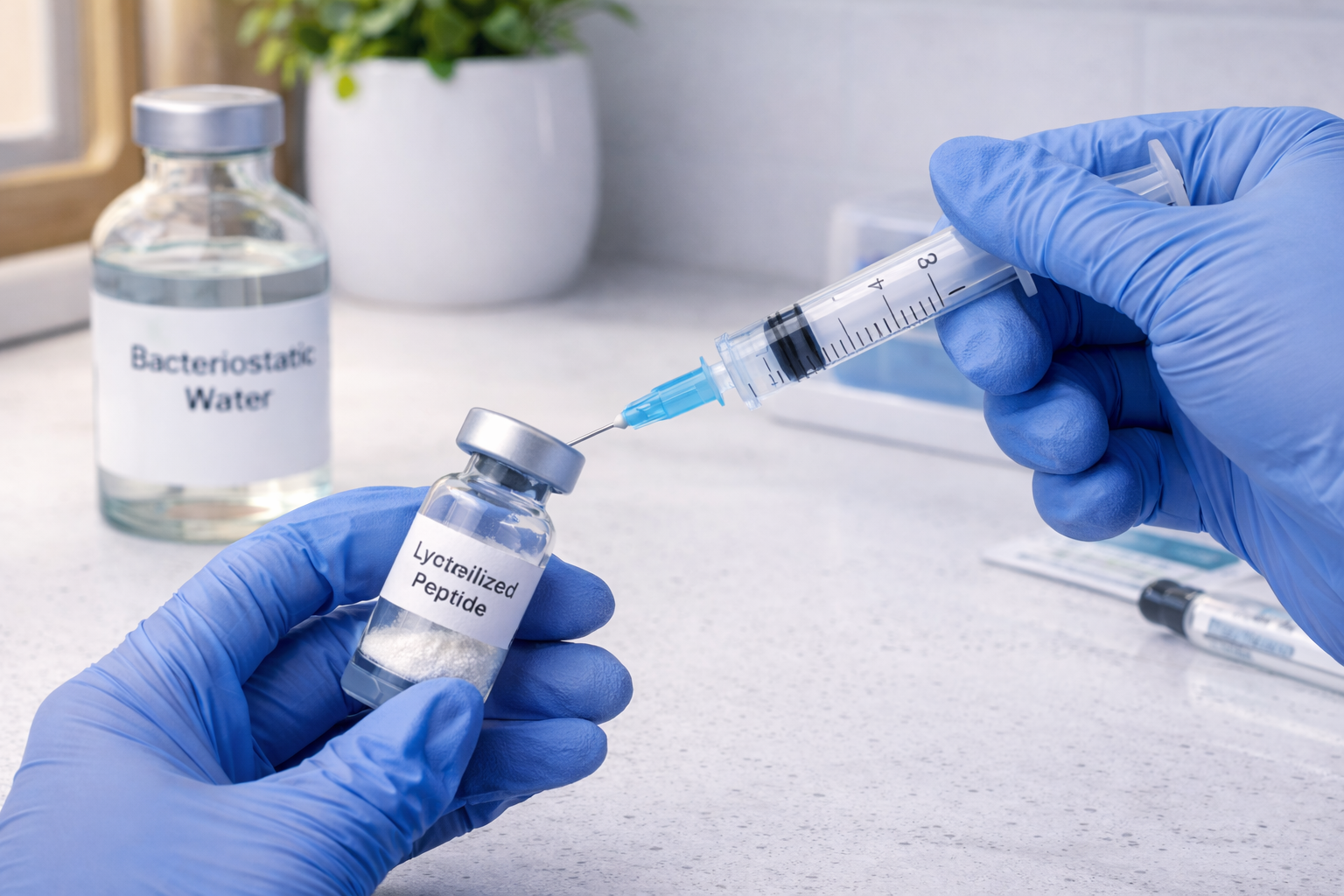
How to reconstitute peptides properly
- Wash hands and work on a clean surface.
- Wipe the tops of both the peptide vial and bacteriostatic water vial with alcohol.
- Draw the desired amount of bacteriostatic water into a sterile syringe.
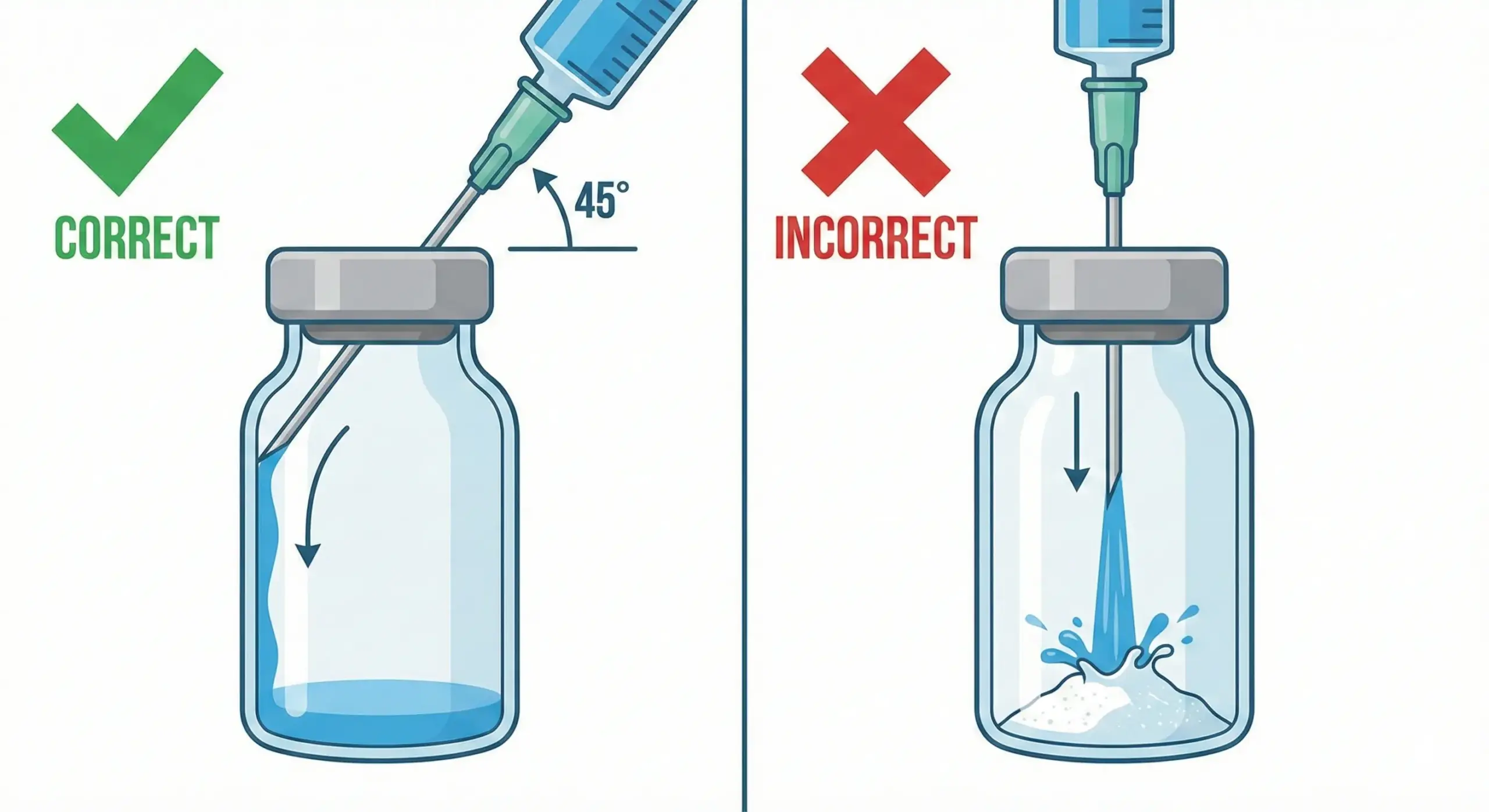
- Inject the water slowly down the inside wall of the peptide vial, not directly onto the powder with force.
- Let the vial sit and dissolve gently. Swirl lightly if needed. Avoid aggressive shaking.
- Once dissolved, refrigerate unless the product-specific data says otherwise.
Hard shaking, poor technique, or injecting water too forcefully can create foam, bubbles, and unnecessary rough handling. Peptides are not protein smoothies. No need to punish the vial.
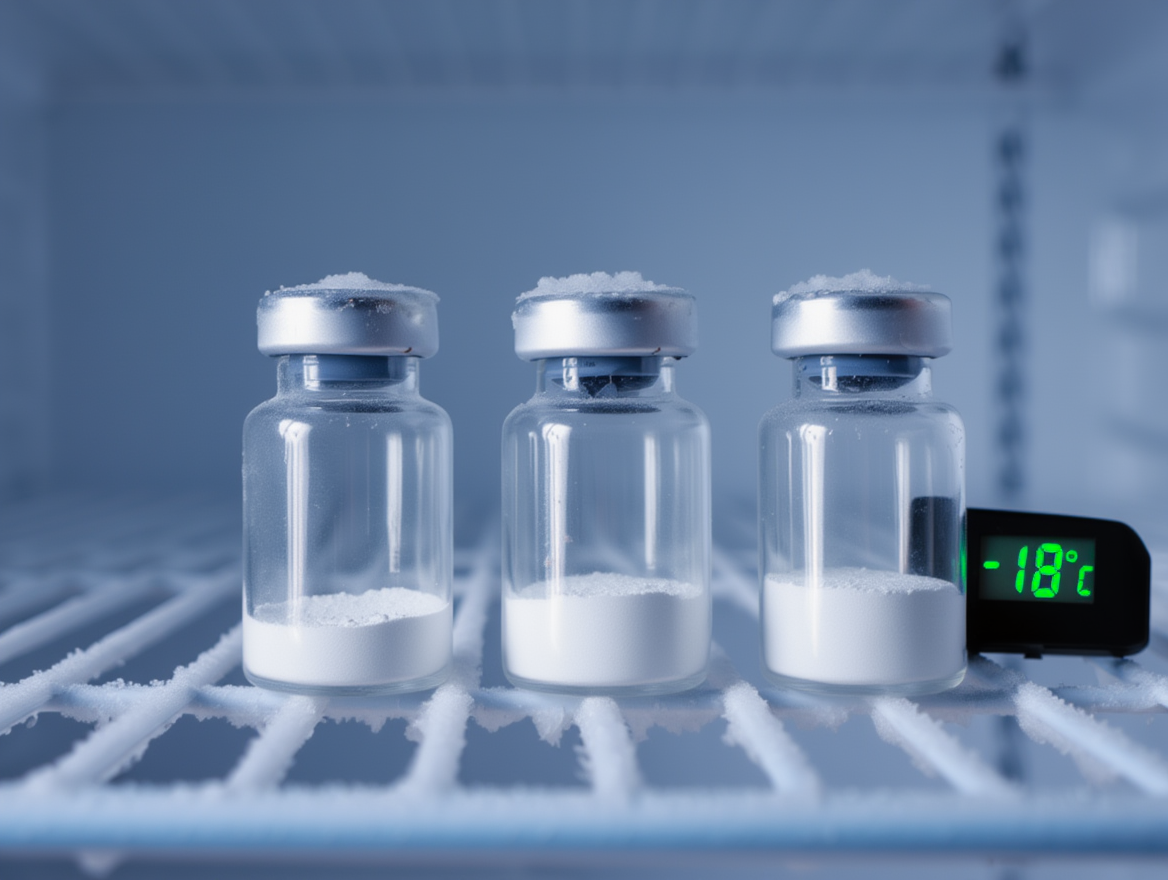
How to store peptides in powder form
Lyophilized, or freeze-dried, peptides are generally the most stable form. This is the preferred state for longer-term storage before reconstitution.
- Short-term room-temperature exposure is usually acceptable during normal handling or shipping.
- Store in a cool, dry environment away from light and humidity.
- Refrigeration at 2–8°C can help extend stability.
- Freezer storage at -18°C or lower is commonly used for longer-term preservation.
In real-world handling, many lyophilized peptides stored properly in a freezer can remain stable for months to over a year, depending on the compound and conditions.
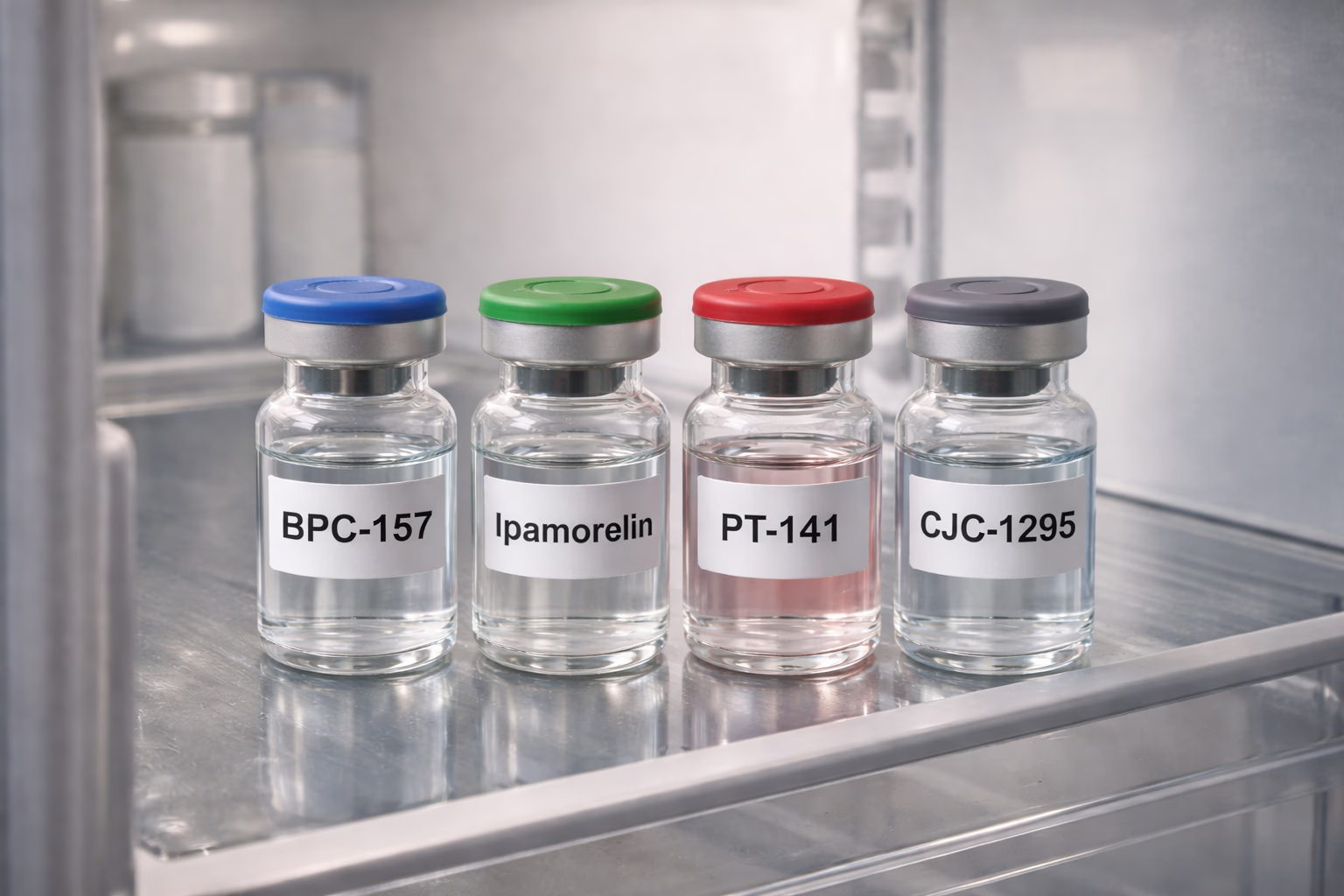
How to store peptides after reconstitution
Once peptides are reconstituted into liquid form, they become more fragile and more vulnerable to degradation, contamination, and handling issues.
- Store reconstituted peptides in a refrigerator at 2–8°C.
- Avoid repeated warming and cooling cycles.
- Keep handling clean each time the vial is accessed.
- Do not leave reconstituted peptides at room temperature for extended periods.
Liquid peptides degrade more quickly than powder, even when stored properly. That does not mean they instantly “go bad,” but potency can slowly decline over time.
How long are peptides good for?
Peptide stability depends on the compound, purity, formulation, storage conditions, and handling. These are general real-world ranges, not exact guarantees.
Unmixed powder
Lyophilized peptides are the most stable form. They are commonly stable for several months refrigerated and often months to over a year when stored frozen.
Reconstituted liquid
Reconstituted peptides are less stable. Many are commonly used within 1–4 weeks refrigerated, though some may remain usable longer depending on handling.
Real-world rule
Stability is not all-or-nothing. Potency usually declines gradually, especially with heat exposure, repeated handling, contamination, or poor storage.
Where people usually get peptide handling wrong
Most problems are not complicated. They usually come from rough mixing, unclear math, or treating a reconstituted vial like it is still dry powder.
Shaking too hard
Gentle swirling is usually enough. Hard shaking adds unnecessary rough handling and makes the process messier than it needs to be.
Guessing the math
If the vial size and the amount of liquid added are not clear, the concentration will not be clear either. This is where calculators help.
Bad storage habits
Leaving reconstituted vials warm, repeatedly cycling temperature, or handling the vial carelessly can reduce stability over time.
Common questions about peptide mixing and storage
How do you work out the concentration after mixing?
The calculation depends on how much peptide is in the vial and how much bacteriostatic water is added. That determines the final concentration, usually shown as mg per mL. From there, you calculate how much liquid corresponds to the desired amount.
How much bacteriostatic water should you add?
There is no single correct amount. The water changes the concentration, not the total peptide in the vial. Many people choose a volume that gives a round number, such as 5 mg/mL for a 10 mg vial in 2 mL.
Do peptides always need to be refrigerated?
Not always. Lyophilized powder is usually more stable and can tolerate short room-temperature exposure during normal handling or shipping. Once reconstituted, refrigeration is usually recommended.
How long do reconstituted peptides last?
Many reconstituted peptides are commonly used within 1–4 weeks when refrigerated. Some may remain usable longer, but stability varies by compound and handling.
Can peptides get warm during shipping?
Brief warmth does not necessarily ruin a dry lyophilized peptide. The bigger concern is prolonged heat, repeated exposure, moisture, or poor handling after reconstitution.
Is it better to store peptides in powder or liquid form?
Powder form is generally better for storage because it is more stable. Liquid form is more convenient after reconstitution but normally has a shorter practical lifespan.
Helpful peptide guides to read next
These pages can help you understand peptide categories, sourcing risks, legal context, storage, and common research-use questions in Vietnam.
Peptides by Category
Browse metabolic, recovery, GH-axis, libido, skin, and longevity peptide research categories.
Where to Buy Peptides
Learn what to consider when researching peptide sources, pricing, storage, and documentation in Vietnam.
Risks of Unverified Peptides
Understand why sourcing, COA matching, handling, and batch traceability matter.
Are Peptides Legal?
A plain-English guide to legal uncertainty, research-use language, and Vietnam context.
Popular Metabolic Options
Learn about commonly discussed metabolic research peptides like GLP-1 and related compounds.
Recovery & Healing Peptides
Explore recovery-focused compounds like BPC-157, TB-500, KPV, and GHK-Cu.
Peptide Stacking Guide
Learn how peptide categories are commonly grouped in research discussions.
Peptides in Vietnam FAQ
Quick answers about sourcing, storage, reconstitution, and research-use terminology.
About PepsVN
Learn why PepsVN focuses on fair pricing, clear communication, and practical peptide information.
Need help checking peptide math?
Message PepsVN if you want help understanding concentration, storage basics, or which reconstitution amount makes the math easier.
This page is for educational and research-use handling information only. It is not medical advice, dosing advice, injection instruction, treatment guidance, or a substitute for product-specific manufacturer or supplier instructions. All compounds referenced on this site are intended for research purposes only and not for human or veterinary use unless explicitly approved for a specific indication by the relevant authority.