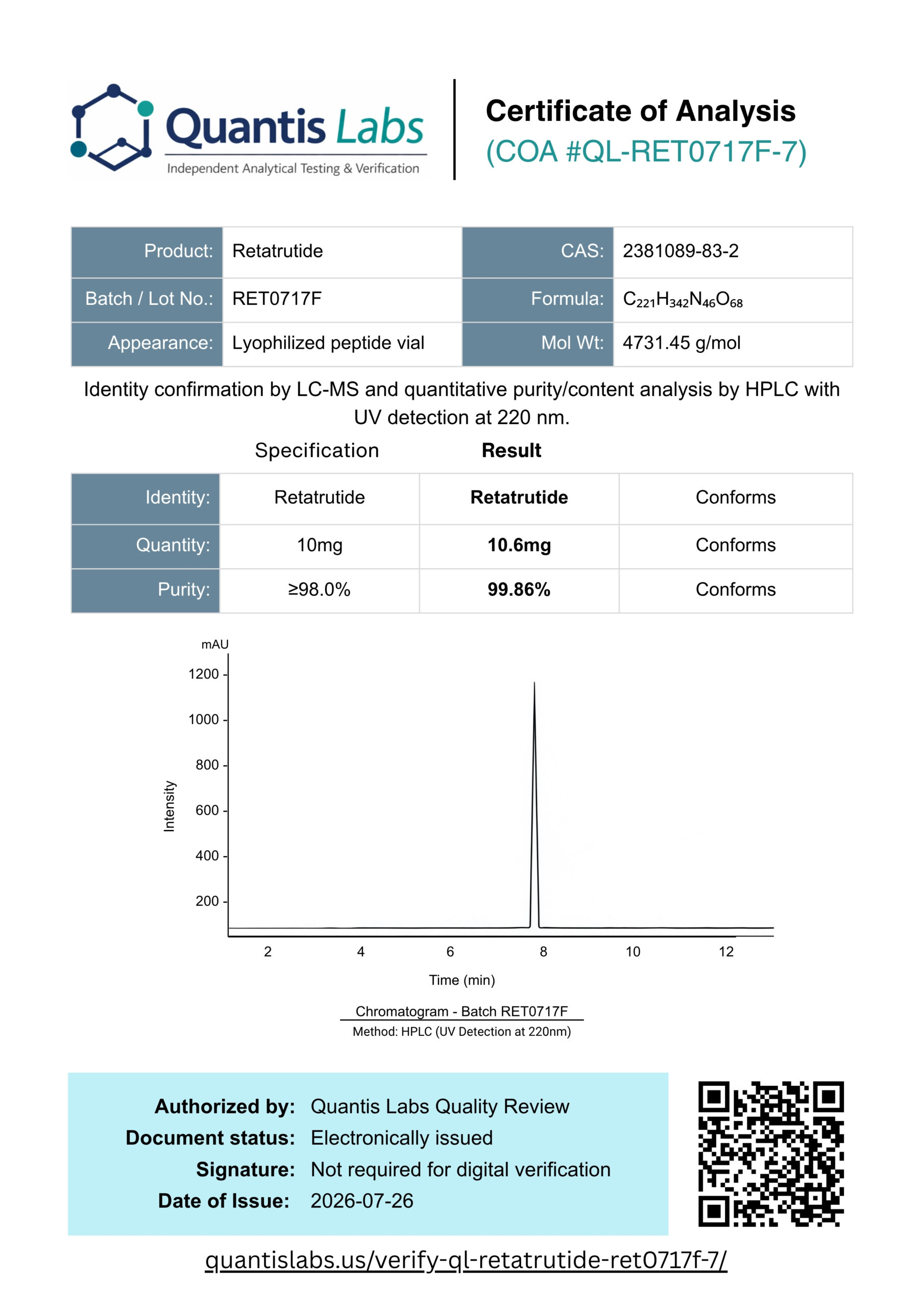
10 mgBatch RET0717F
Purity99.86%
Quantity10.6 mg
Issued26 Jul 2026

Retatrutide is an investigational peptide research compound. Compare all four listed vial strengths and the available batch records below.
| Vial strength | Price | Listed status | Inquiry |
|---|---|---|---|
| 10 mg | 750,000 ₫ US$30 | In stock | Ask about this strength |
| 20 mg | 1,250,000 ₫ US$50 | In stock | Ask about this strength |
| 30 mg | 1,625,000 ₫ US$65 | In stock | Ask about this strength |
| 50 mg | 2,000,000 ₫ US$80 | In stock | Ask about this strength |
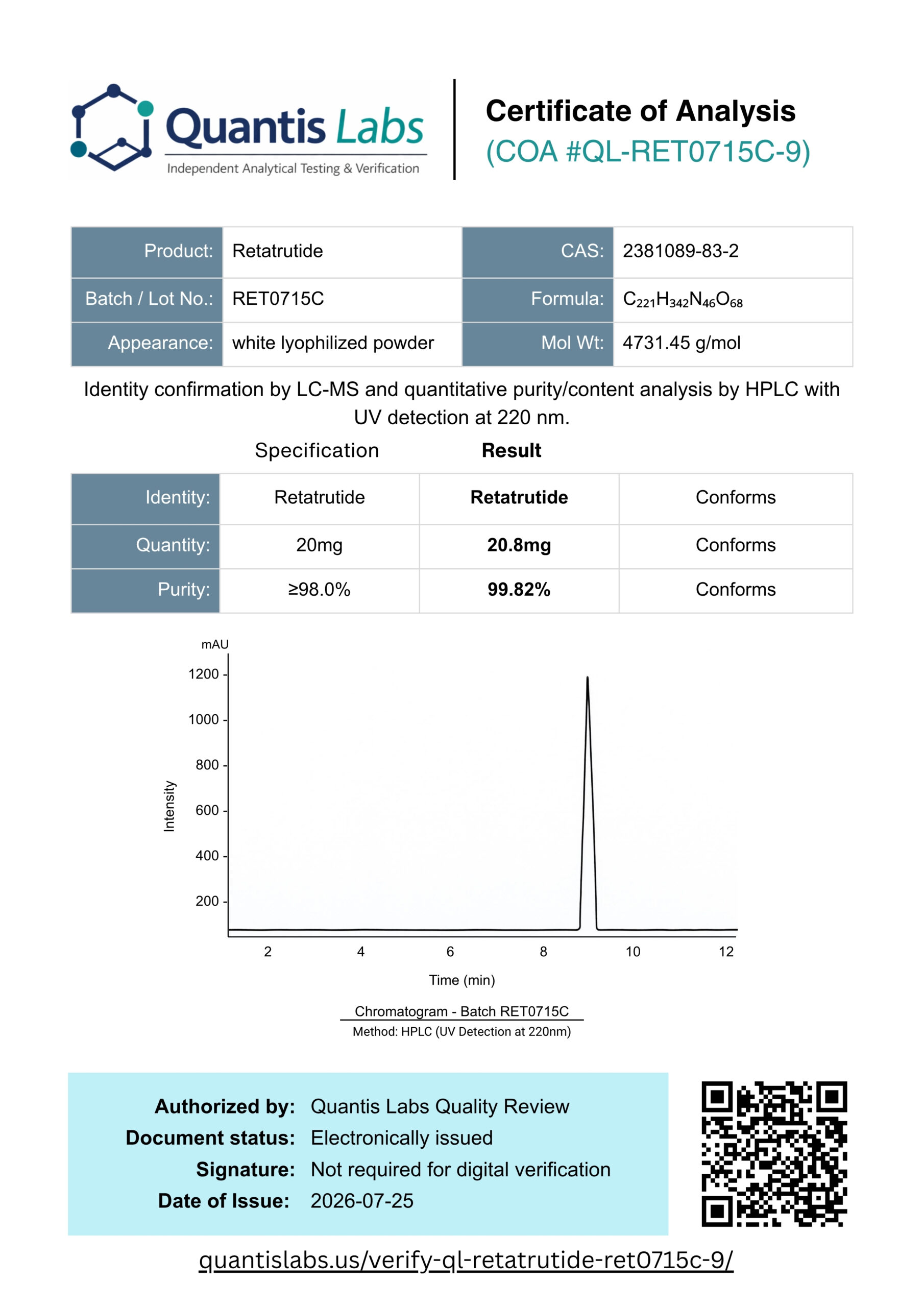
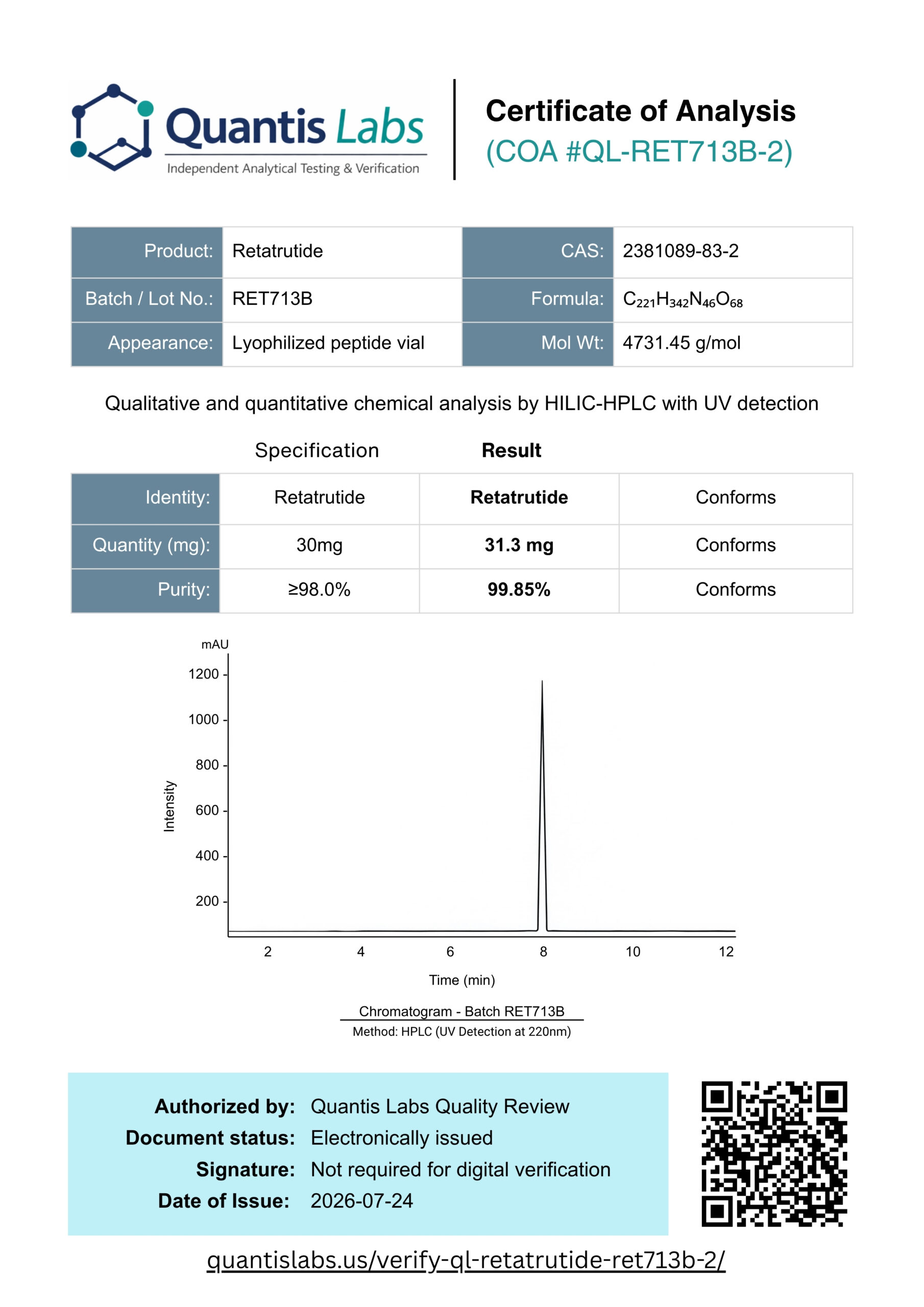
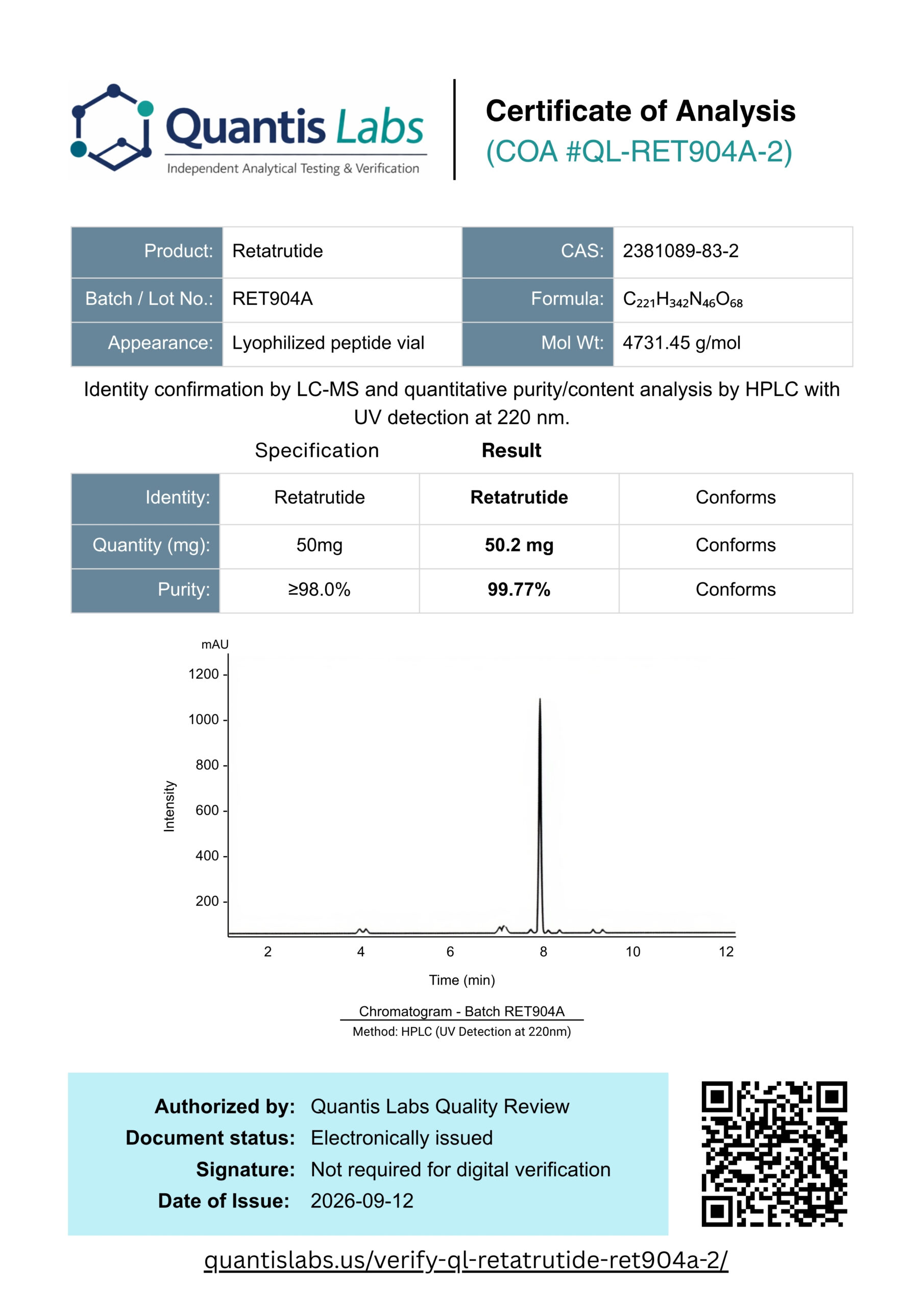
Independent lab reports for each listed strength. Match the batch number on your vial label to the report.
Retatrutide (development code LY3437943) is an investigational peptide developed by Eli Lilly. It is a single molecule designed to activate three hormone receptors at once: GIP, GLP-1 and glucagon. That is why it is often described as a "triple agonist", as distinct from single-receptor compounds such as semaglutide or dual-receptor compounds such as tirzepatide.
Retatrutide is not approved as a medicine by the US FDA, the European Medicines Agency or Vietnam's Drug Administration. It is still being studied in Eli Lilly's Phase 3 TRIUMPH clinical trial programme, and Lilly has said it plans to file for FDA approval in 2027. PepsVN supplies it as a research compound only.
Each certificate describes one tested batch, not every vial ever produced. When your order arrives, check three things against the certificate:
The "Verify report" button on each certificate opens the testing lab's own record, so you can confirm the report is genuine rather than relying on a copy.
Keep unopened vials in the refrigerator (2–8 °C), away from light. Freeze-dried peptides tolerate room temperature for short periods, such as a few days in transit. Long-term exposure to Vietnam's heat and humidity should still be avoided. Once reconstituted, a peptide is far less stable, so it should be kept refrigerated and used within the period given in your research protocol. See our storage guide for more detail.
No. As of September 2026, retatrutide has not been approved as a medicine anywhere. It remains in clinical trials, and PepsVN sells it strictly for laboratory research.
They act on different numbers of hormone receptors. Semaglutide targets GLP-1. Tirzepatide targets GLP-1 and GIP. Retatrutide adds the glucagon receptor as a third target. Tirzepatide and semaglutide are approved medicines in many countries, while retatrutide is still investigational.
The strengths differ only in how much peptide is in each vial. Larger vials cost less per milligram; see the price table above. If you are unsure, message us with what you need and we will confirm current stock and the batch that will be supplied.
Yes. Send us the strength you are ordering and we will confirm which batch you will receive and share its report before you pay.
Send the product, strength, quantity and your city. PepsVN will confirm stock, the supplied batch, delivery timing and total cost.
Use the product label and batch-specific documentation for identification and handling. A certificate describes the tested sample; it does not establish suitability for human or animal use.
Tell us the strength, quantity and delivery city. We reply with availability, the batch you will receive and the total cost.