Tesamorelin • GHRH Analog • Vietnam • Research information

Tesamorelin in Vietnam

Tesamorelin is a growth hormone releasing hormone (GHRH) analog commonly researched for growth hormone secretion, IGF-1 production, visceral fat reduction, body composition, recovery, and healthy-aging pathways.

Unlike growth hormone itself, Tesamorelin does not directly provide GH. Instead, it signals the pituitary gland to release more of its own growth hormone. Think of it as ringing the doorbell rather than climbing through the window.

01
Commonly researched for growth hormone and IGF-1 production.
02
Frequently discussed in visceral fat and body-composition research.
03
Often compared with HGH, CJC-1295, and Ipamorelin.
Tesamorelin peptide vial
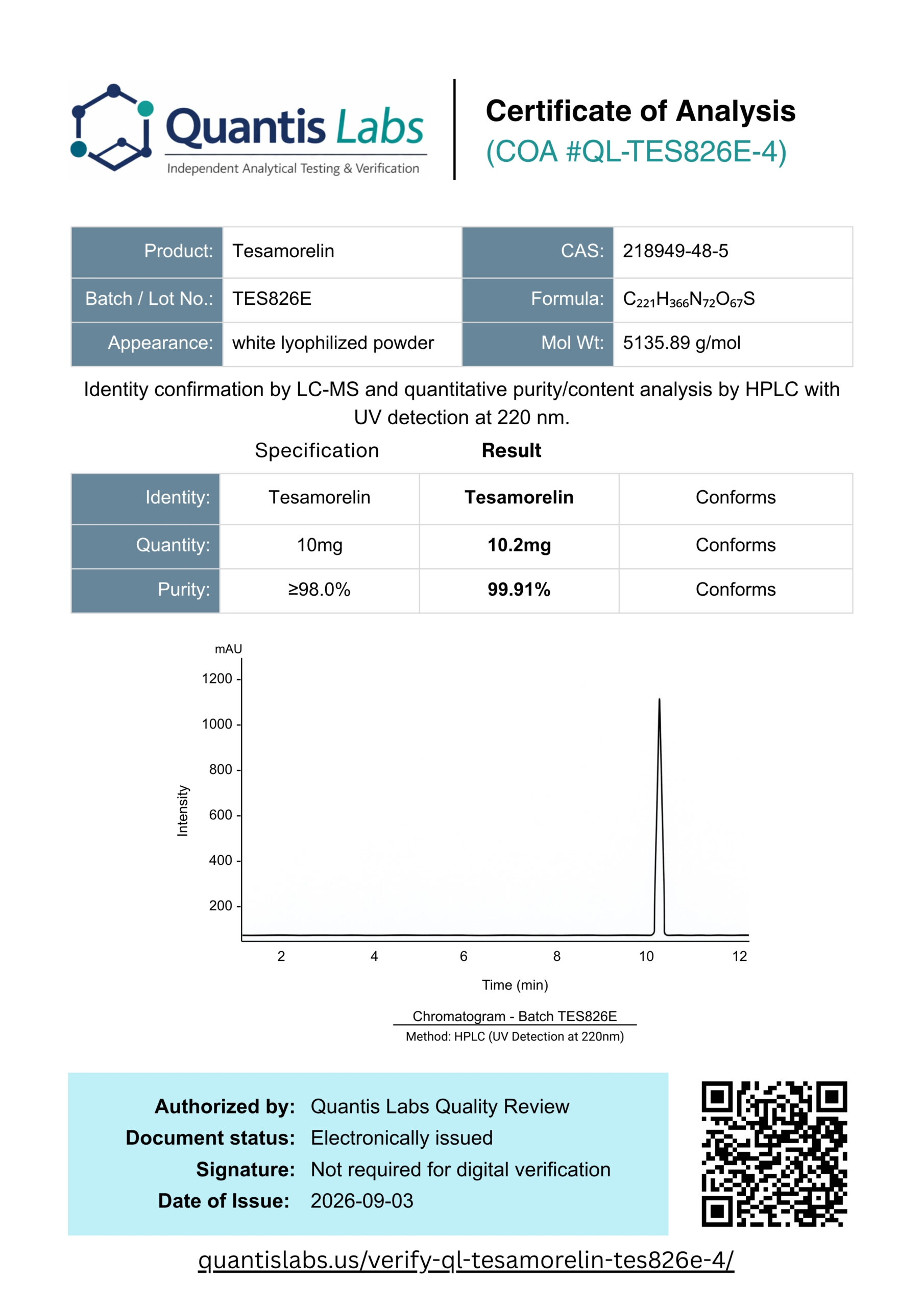
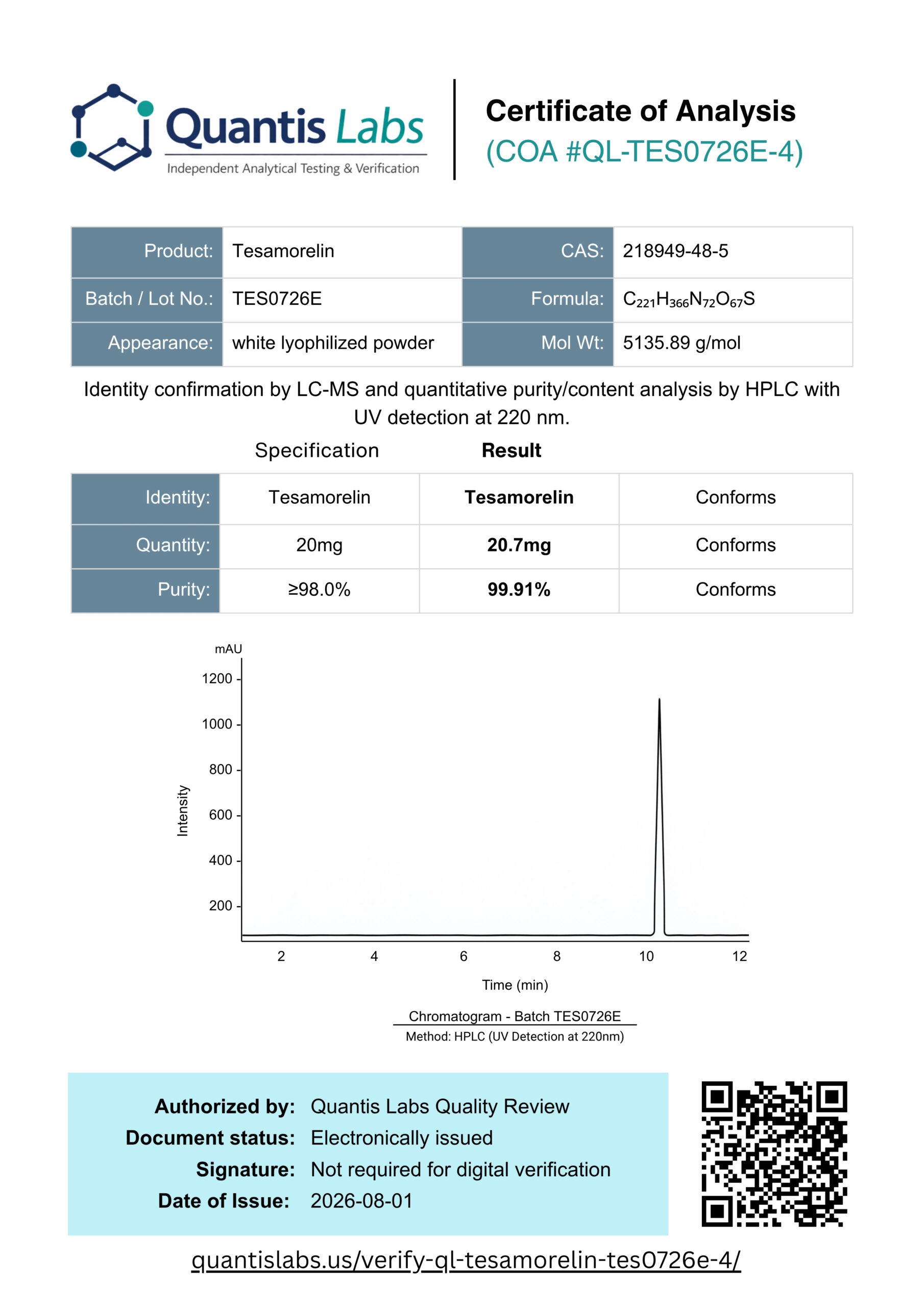
Scan to view COA
Tesamorelin COA QR code
Research Overview

Why researchers are interested in Tesamorelin

Tesamorelin is one of the most studied growth-hormone-related peptides because it stimulates natural GH release rather than supplying GH directly. Researchers are especially interested in its relationship to IGF-1 production, body composition, recovery, and visceral fat metabolism.

01

Growth hormone release

Tesamorelin stimulates the pituitary gland to release growth hormone through normal physiological pathways.

02

IGF-1 production

Increased GH signaling may lead to increased IGF-1 production, which is one reason Tesamorelin receives so much attention.

03

Visceral fat research

Tesamorelin is particularly known for research involving abdominal and visceral fat reduction.

Reference Pricing

Common Tesamorelin research formats in Vietnam

Pricing below is listed as Vietnam reference pricing for research-use formats. Availability, batch verification, and sourcing may vary.

Tesamorelin

10mg vial
$40 1,000,000₫

Tesamorelin

20mg vial
$65 1,625,000₫

BAC Water

10mL vial
$5 125,000₫
Tesamorelin vs HGH

Why researchers often compare Tesamorelin and HGH

Both compounds are discussed for growth hormone pathways, but they work very differently.

HGH Tesamorelin
Provides growth hormone directly Stimulates natural GH release
External hormone source Uses pituitary signaling pathways
Bypasses natural GH regulation Works through normal physiological release mechanisms
Often discussed for recovery and performance Often discussed for visceral fat and body-composition research
Simple version: HGH gives the body growth hormone. Tesamorelin encourages the body to make more of its own.
Mechanism

How Tesamorelin is believed to work

Tesamorelin works by mimicking growth hormone releasing hormone, or GHRH. Instead of adding growth hormone directly, it signals the pituitary gland to release more of its own growth hormone.

Step 1: Tesamorelin signals the pituitary

Tesamorelin binds to GHRH receptors in the pituitary gland. This tells the pituitary to release growth hormone into circulation.

In simple terms, Tesamorelin does not bring growth hormone to the party. It tells the body to send its own invitation.

Step 2: Growth hormone increases IGF-1

Once growth hormone is released, it travels to the liver and other tissues where it stimulates production of IGF-1.

IGF-1 is one of the main downstream signals researchers track because it is involved in growth, repair, tissue remodeling, and body-composition pathways.

Step 3: Lipolysis and fat metabolism

Growth hormone signaling is strongly connected to lipolysis, which means the breakdown of stored fat.

This is one reason Tesamorelin is so often discussed in visceral-fat and abdominal-fat research. It does not simply “burn fat” like a magic button, but it may influence the hormone signals that tell the body how to use stored energy.

Step 4: Visceral fat research

Visceral fat is the deeper abdominal fat stored around organs. It is metabolically different from the fat under the skin.

Tesamorelin became especially interesting because researchers studied it in relation to visceral adipose tissue rather than only general body weight.

Step 5: Recovery and tissue signaling

Growth hormone and IGF-1 are involved in collagen turnover, protein synthesis, tissue repair, and recovery signaling.

This is why Tesamorelin is often discussed alongside compounds like Ipamorelin, HGH, and CJC-1295 in growth-hormone-axis research.

Why it is not the same as HGH

HGH provides growth hormone directly. Tesamorelin works upstream by asking the pituitary to release growth hormone.

That difference matters. HGH is like delivering the package yourself. Tesamorelin is like calling the warehouse and asking them to ship it through the body’s own system.

Reconstitution Examples

Tesamorelin calculations with BAC water

These examples use a standard U100 insulin syringe where 100 units equals 1mL.

10mg vial + 2mL BAC water

Dose Units Approx. Vial Duration
0.5mg10 units20 doses
1mg20 units10 doses
2mg40 units5 doses
5mg100 units2 doses
With 2mL added to a 10mg vial, each unit equals 50mcg.

20mg vial + 2mL BAC water

Dose Units Approx. Vial Duration
0.5mg5 units40 doses
1mg10 units20 doses
2mg20 units10 doses
5mg50 units4 doses
With 2mL added to a 20mg vial, each unit equals 100mcg.

Need different calculations?

Use the PepsVN peptide calculator to calculate any vial size, BAC water amount, dose, or syringe-unit measurement.

Common Stacks

What researchers often discuss alongside Tesamorelin

Tesamorelin + Ipamorelin

One of the most common combinations. Tesamorelin provides GHRH signaling while Ipamorelin provides GHRP signaling.

Tesamorelin + CJC-1295

Researchers often compare these compounds because both act through GHRH pathways.

Tesamorelin + HGH

Often discussed in advanced growth-hormone-related research, although they work through very different mechanisms.

Tesamorelin + Retatrutide

Frequently discussed in body-composition research because one focuses on GH pathways while the other focuses on metabolic pathways.

Tesamorelin + MOTS-c

A common combination in metabolic and body-composition discussions because both compounds affect energy regulation through different mechanisms.

Tesamorelin + AOD9604

Often discussed in fat-loss and body-composition research because the compounds target different pathways.

Research Status

What researchers actually know so far

Tesamorelin remains one of the most studied GHRH analogs because of its ability to stimulate natural growth hormone release and increase IGF-1 levels.

Researchers continue to study its relationship to visceral fat reduction, body composition, recovery, aging, and metabolic health.

The science is promising, but no peptide replaces proper sleep, nutrition, training, and recovery. Biology remains stubbornly attached to reality.

Disclaimer:

All products and information referenced on this page are intended strictly for research purposes only. Tesamorelin is a research compound and is not presented as a medical treatment, anti-aging treatment, fat-loss treatment, hormone therapy, or therapeutic recommendation. Nothing on this page is medical advice, diagnosis, treatment guidance, or a recommendation for human or animal use. The purchase, possession, sale, or use of research compounds may be restricted or illegal in some jurisdictions. Readers are responsible for complying with local laws and regulations.