HGH • Vietnam • Research information

HGH in Vietnam

HGH, or human growth hormone, is a naturally occurring hormone produced by the pituitary gland. It is commonly researched for growth signaling, IGF-1 activity, body composition, recovery, metabolism, and age-related hormone decline models.

Unlike growth-hormone secretagogues such as CJC-1295 + Ipamorelin, HGH is not trying to convince the body to release more growth hormone. It is growth hormone itself. That makes it powerful, interesting, and also something that deserves a lot more respect than “just take more bro.”

01
Commonly researched for IGF-1 signaling, growth pathways, and body composition.
02
Frequently discussed in recovery, metabolism, sleep, and age-related hormone research.
03
Different from secretagogues because HGH is direct growth hormone, not a release signal.
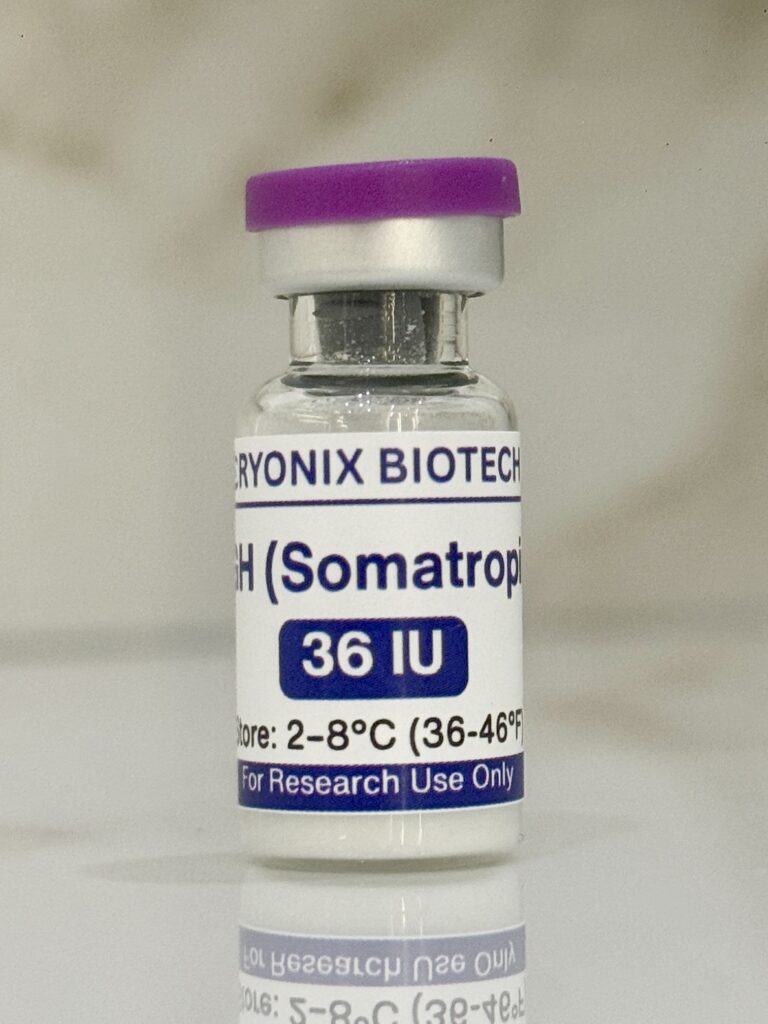
HGH vial
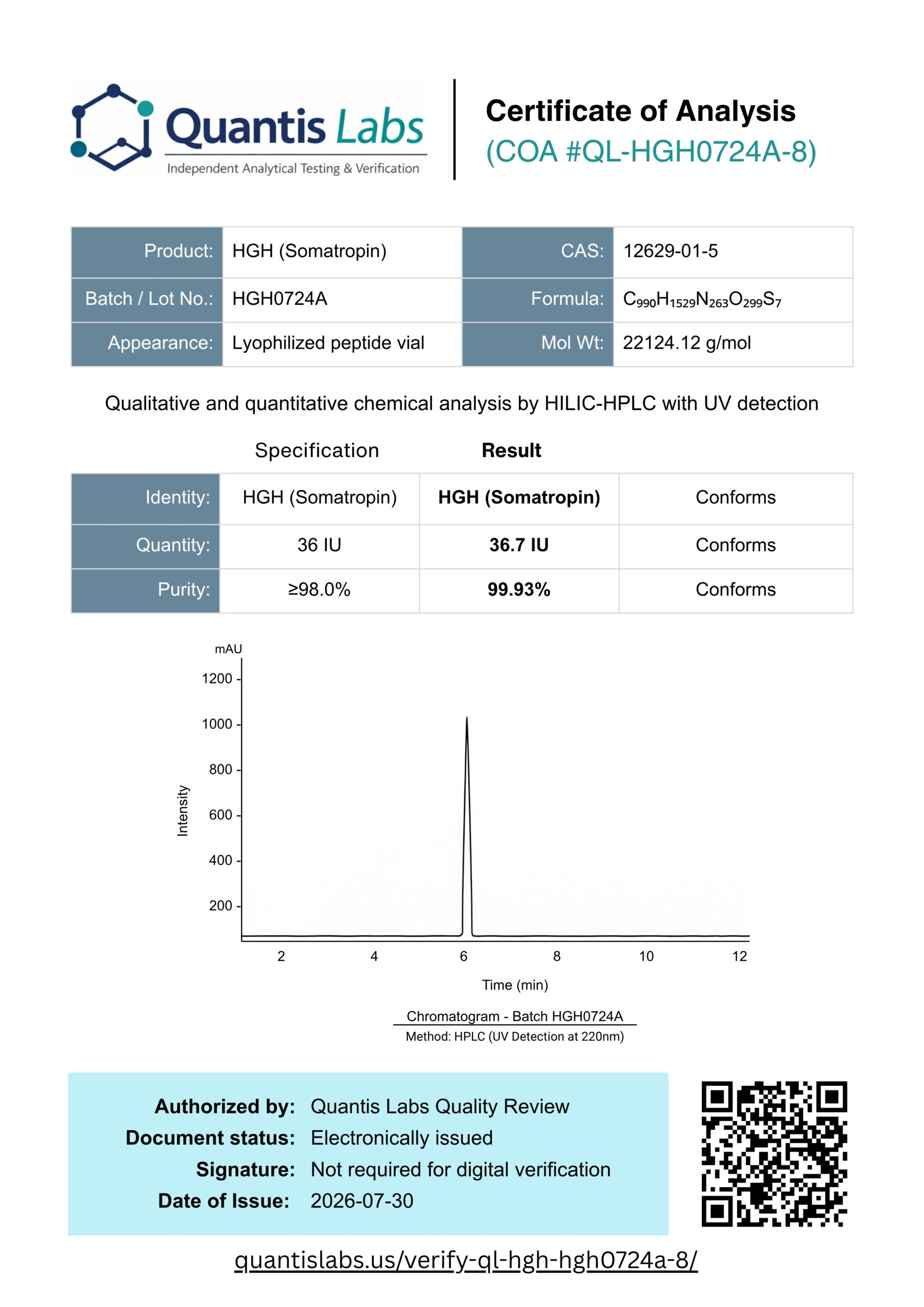
Scan to view COA
HGH COA QR code
Research Overview

Why researchers are interested in HGH

HGH is one of the body’s major signaling hormones. Researchers study it because it influences growth, tissue repair, metabolism, body composition, bone and connective tissue, and downstream IGF-1 signaling.

01

IGF-1 signaling

HGH stimulates the liver and other tissues to produce IGF-1, one of the key growth and repair-related signaling molecules.

02

Body composition

HGH is frequently discussed for fat metabolism, lean mass support, fluid balance, and changes in body composition.

03

Recovery research

Growth hormone signaling is tied to tissue repair, collagen turnover, sleep quality, and recovery biology.

Reference Pricing

Common HGH research formats in Vietnam

Pricing below is listed as Vietnam reference pricing for research-use formats. Availability, batch verification, and sourcing may vary.

HGH

15IU vial
$25 625,000₫

HGH

36IU vial
$40 1,000,000₫

BAC Water

10mL vial
$5 125,000₫
Common Research Protocols

Common HGH research-dose discussions

HGH is discussed in IU rather than milligrams by most research communities. Ranges vary widely depending on the research model, and HGH should be treated much more carefully than typical peptide discussions.

Research Focus Commonly Discussed Range Notes
Conservative research discussions 1-2IU Often discussed where lower exposure is the goal.
Body-composition research 2-4IU Frequently discussed in fat metabolism and lean-mass research contexts.
Higher-dose discussions 4IU+ More aggressive research discussions. Side effects and monitoring become much more important.
These examples represent research-community discussions only and should not be interpreted as medical guidance.
Reconstitution Examples

HGH calculations with 1mL or 2mL BAC water

These examples use a standard U100 insulin syringe where 100 units equals 1mL. HGH is usually calculated in IU, so the key question is how many IU each syringe unit represents.

15IU vial + 1mL BAC water

Dose Units Approx. Vial Duration
1IU6.7 units15 doses
2IU13.3 units7.5 doses
3IU20 units5 doses
5IU33.3 units3 doses
With 1mL added to a 15IU vial, each unit equals 0.15IU.

15IU vial + 2mL BAC water

Dose Units Approx. Vial Duration
1IU13.3 units15 doses
2IU26.7 units7.5 doses
3IU40 units5 doses
5IU66.7 units3 doses
With 2mL added to a 15IU vial, each unit equals 0.075IU.

36IU vial + 1mL BAC water

Dose Units Approx. Vial Duration
1IU2.8 units36 doses
2IU5.6 units18 doses
3IU8.3 units12 doses
5IU13.9 units7.2 doses
With 1mL added to a 36IU vial, each unit equals 0.36IU.

36IU vial + 2mL BAC water

Dose Units Approx. Vial Duration
1IU5.6 units36 doses
2IU11.1 units18 doses
3IU16.7 units12 doses
5IU27.8 units7.2 doses
With 2mL added to a 36IU vial, each unit equals 0.18IU.

1mL or 2mL?

For HGH, 2mL usually makes dose measurement easier, especially with higher-IU vials like 36IU. 1mL keeps injection volume smaller, but the measurements can become tiny. Tiny measurements are where math errors like to hide and cause problems.

Need different calculations?

Use the PepsVN peptide calculator to calculate vial size, BAC water amount, IU dose, and syringe-unit measurement.

HGH vs Secretagogues

How HGH differs from CJC-1295 + Ipamorelin

HGH and growth-hormone secretagogues are often discussed together, but they are not the same thing.

HGH CJC-1295 + Ipamorelin
Direct human growth hormone Signals the pituitary to release growth hormone
More direct exposure Depends on pituitary response
Can raise IGF-1 more predictably May create more pulse-style GH release
Higher monitoring importance Often discussed as gentler but less direct
Simple version: HGH brings growth hormone directly. CJC/Ipamorelin tries to get the body to release more of its own. One is delivery; the other is persuasion.
Common Stacks

What researchers often discuss alongside HGH

HGH is frequently discussed with compounds related to recovery, body composition, insulin sensitivity, mitochondrial function, and tissue repair.

HGH + Retatrutide

Retatrutide is discussed for appetite and metabolic pathways, while HGH is discussed for recovery, lean-mass, and body-composition research.

HGH + BPC-157

BPC-157 is commonly discussed for tissue-repair models, while HGH is discussed for broader growth and recovery signaling.

HGH + MOTS-c

MOTS-c is often discussed for mitochondrial and metabolic research, while HGH is discussed for growth-axis and body-composition models.

Mechanism

How HGH works in the body

HGH is not just a “muscle and fat-loss hormone.” That is the gym-bro summary, and gym-bro summaries are usually missing several chapters. HGH affects growth, metabolism, tissue repair, water balance, glucose regulation, and IGF-1 signaling.

Pituitary growth hormone

HGH is normally produced by the pituitary gland in pulses, especially during deep sleep.

These pulses help regulate growth, tissue maintenance, metabolism, and repair signaling throughout the body.

IGF-1 production

One of HGH’s most important downstream effects is stimulating IGF-1 production, especially in the liver.

IGF-1 is involved in growth, repair, cell signaling, and anabolic processes. This is why researchers often track IGF-1 when studying HGH exposure.

Fat metabolism

HGH is discussed for its relationship to lipolysis, which means the breakdown of stored fat.

It can influence how the body uses fat and carbohydrates for energy, which is why it appears so often in body-composition research.

Glucose and insulin sensitivity

HGH can also affect blood glucose and insulin sensitivity.

This is one reason HGH research should be treated carefully. More HGH signaling is not automatically better. The body is not a video game where every stat should be maxed out.

Fluid retention and soft tissue

HGH can influence water retention and soft tissue changes.

This is why research discussions often mention swelling, tightness, carpal-tunnel-like symptoms, or joint discomfort when exposure is too high.

Why monitoring matters

Because HGH affects IGF-1, glucose, fluid balance, and tissue growth signaling, monitoring becomes more important than with many smaller peptides.

HGH is powerful biology. Treating it casually is how people turn “research” into “why are my hands numb?”

Research Status

What researchers actually know so far

HGH is a naturally occurring hormone and is approved medically for specific diagnosed conditions in many countries. However, research-use HGH outside approved medical use is a very different discussion.

HGH is widely studied because of its effects on IGF-1, growth, metabolism, body composition, recovery, and aging-related hormone decline.

Because HGH can affect blood glucose, insulin sensitivity, IGF-1, fluid retention, and tissue growth, it should be treated with much more caution than typical peptide research compounds.

Disclaimer:

All products and information referenced on this page are intended strictly for research purposes only. HGH is not presented as a medical treatment, hormone replacement recommendation, performance-enhancement recommendation, or therapeutic guidance. Nothing on this page is medical advice, diagnosis, treatment guidance, or a recommendation for human or animal use. The purchase, possession, sale, or use of research compounds may be restricted or illegal in some jurisdictions. Readers are responsible for complying with local laws and regulations.