GHK-Cu in Vietnam | Reconstitution, Research Dosing & Reference Pricing | PepsVN
GHK-Cu • Vietnam • Research information

GHK-Cu in Vietnam

GHK-Cu is a naturally occurring copper-binding peptide commonly researched for skin remodeling, collagen support, wound-healing models, hair research, and tissue-repair signaling.

It is one of the most popular “skin and repair” peptides because it is tied to copper biology, extracellular matrix remodeling, and collagen-related pathways. In plain English: researchers like it because it may help tissues behave less like old carpet and more like something still under warranty.

01
Commonly researched for collagen, skin remodeling, and wound-healing models.
02
Known as a copper peptide because it binds copper ions.
03
Frequently discussed in skin, hair, repair, and longevity-focused research stacks.
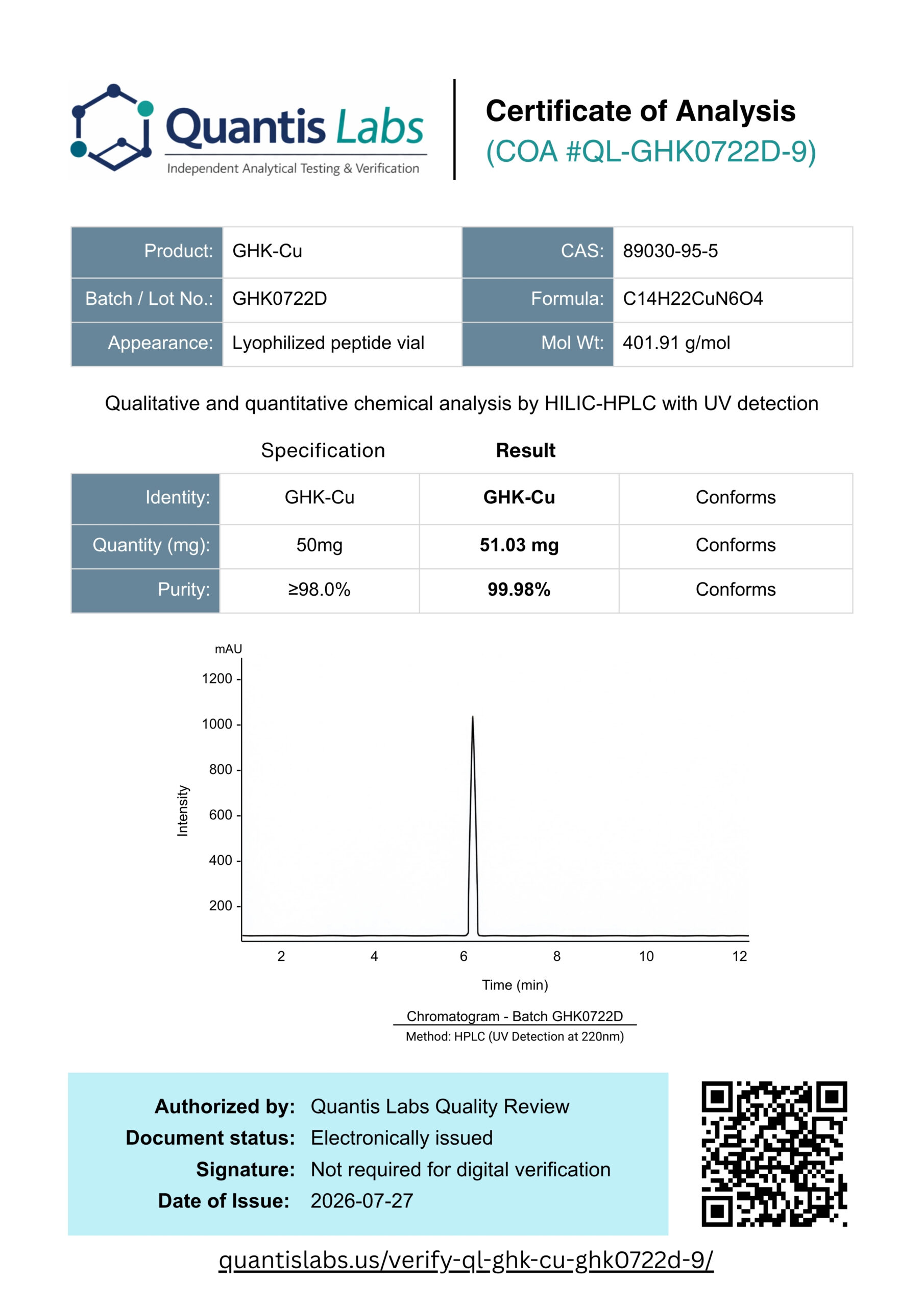
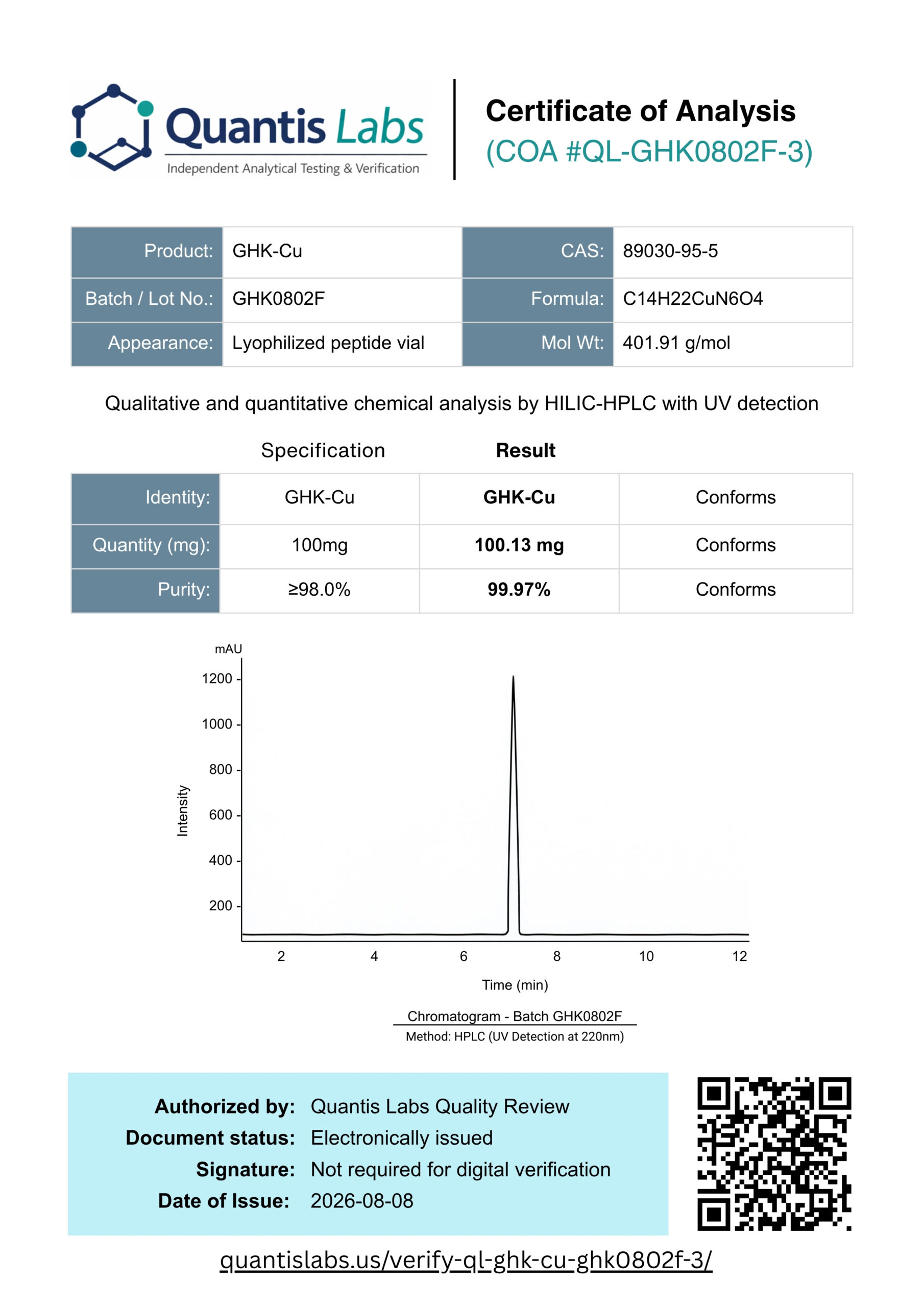
Scan to view COA
Research Overview

Why researchers are interested in GHK-Cu

GHK-Cu is widely discussed because it appears to influence several repair and remodeling pathways. Researchers are especially interested in its relationship to collagen production, skin quality, wound healing, inflammation signaling, and hair-follicle biology.

01

Skin remodeling

GHK-Cu is commonly researched for skin structure, collagen turnover, elasticity, and extracellular matrix remodeling.

02

Wound-healing research

Researchers discuss GHK-Cu for tissue-repair models because of its relationship to inflammation, remodeling, and repair signaling.

03

Hair and follicle research

GHK-Cu is often discussed in hair-growth research because copper peptides may influence follicle signaling and scalp tissue quality.

Reference Pricing

Common GHK-Cu research formats in Vietnam

Pricing below is listed as Vietnam reference pricing for research-use formats. Availability, batch verification, and sourcing may vary.

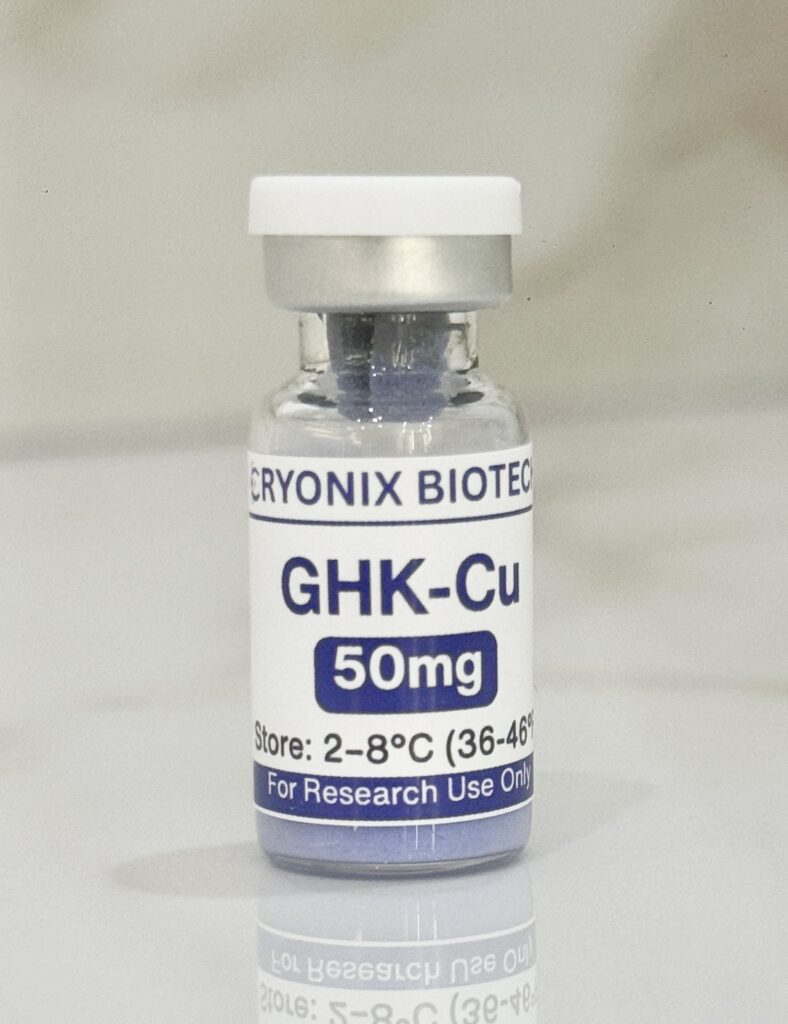
GHK-Cu

50mg vial
$25 625,000₫

BAC Water

10mL vial
$5 125,000₫
Common Research Protocols

Common GHK-Cu research-dose discussions

Research discussions vary widely. GHK-Cu is often discussed in milligram ranges, especially when used in skin, repair, or cosmetic research models.

Research Focus Commonly Discussed Range Notes
Conservative research discussions 1-2mg Often discussed as a lower research range.
Skin and repair research 2-5mg Frequently discussed in collagen, skin, and tissue-remodeling contexts.
Higher-dose discussions 5-10mg More aggressive research discussions. Copper-related compounds should not be treated casually.
These examples represent research-community discussions only and should not be interpreted as medical guidance.
Reconstitution Examples

GHK-Cu calculations with 2mL or 3mL BAC water

These examples use a standard U100 insulin syringe where 100 units equals 1mL. For a 50mg GHK-Cu vial, 2mL or 3mL is usually more practical than 1mL because the vial contains a larger amount of peptide.

50mg vial + 2mL BAC water

Dose Units Approx. Vial Duration
1mg4 units50 doses
2mg8 units25 doses
5mg20 units10 doses
10mg40 units5 doses
With 2mL added to a 50mg vial, each unit equals 250mcg.

50mg vial + 3mL BAC water

Dose Units Approx. Vial Duration
1mg6 units50 doses
2mg12 units25 doses
5mg30 units10 doses
10mg60 units5 doses
With 3mL added to a 50mg vial, each unit equals approximately 167mcg.

2mL or 3mL?

Both are practical for a 50mg vial. 2mL keeps injection volume smaller. 3mL makes smaller doses easier to measure because the syringe units are larger. If the research dose is around 1-2mg, 3mL may be easier. If it is closer to 5mg, 2mL is usually plenty.

Need different calculations?

Use the PepsVN peptide calculator to calculate any vial size, BAC water amount, dose, or syringe-unit measurement.

Topical vs Injectable

Why GHK-Cu is discussed in different formats

GHK-Cu is unusual because it is discussed in both cosmetic/topical research and injectable research contexts. Same peptide family, different delivery questions.

Topical research

GHK-Cu is widely used in cosmetic and skin-care research because copper peptides are studied for skin texture, collagen signaling, and visible skin-aging models.

Topical formats focus more on local skin effects. The challenge is always penetration: getting enough compound where it needs to go instead of just making expensive blue water sit on the surface.

Injectable research

Injectable research formats are discussed when researchers want more predictable systemic exposure.

This is why injectable GHK-Cu appears in broader repair, skin, hair, and recovery discussions. The research question shifts from “what happens on the skin?” to “what happens when copper peptide signaling is studied systemically?”

Common Stacks

What researchers often discuss alongside GHK-Cu

GHK-Cu is often discussed with repair, recovery, collagen, and longevity-focused peptides because it sits at the intersection of skin biology, tissue remodeling, and wound-healing research.

GHK-Cu + BPC-157

BPC-157 is commonly discussed for tissue-repair models, while GHK-Cu is discussed for collagen, skin, and remodeling pathways.

GHK-Cu + TB-500

TB-500 is often discussed for cell migration and tissue-repair models. GHK-Cu adds collagen and skin-remodeling research interest.

GHK-Cu + Epitalon

Epitalon is discussed in longevity and cellular-aging research, while GHK-Cu is discussed in skin, repair, and regeneration-related models.

Mechanism

How GHK-Cu is believed to work

GHK-Cu is not just “a skin peptide.” That is the lazy explanation. It is a copper-binding peptide that appears to influence repair signaling, extracellular matrix remodeling, inflammation balance, and collagen-related pathways.

What does the “Cu” mean?

“Cu” is the chemical symbol for copper. GHK-Cu means the GHK peptide is bound to copper.

Copper is involved in many biological processes, including enzymes that support collagen formation, antioxidant activity, and tissue remodeling.

Collagen and extracellular matrix

Skin, tendons, ligaments, and connective tissue depend heavily on collagen and extracellular matrix structure.

GHK-Cu is researched for its relationship to collagen synthesis, matrix remodeling, and tissue organization. In plain English, it may help support the rebuilding and cleanup crew involved in healthier tissue structure.

Wound-healing signaling

GHK-Cu has been studied in wound-healing models because tissue repair requires inflammation control, collagen turnover, blood vessel support, and cellular migration.

It does not “magically heal skin.” It appears to influence several systems the body already uses when repairing damage.

Inflammation balance

Inflammation is useful at the beginning of repair, but too much inflammation for too long can slow recovery and damage tissue.

GHK-Cu is often discussed for its possible role in balancing inflammatory signaling. The goal is not to eliminate inflammation; the goal is to stop it from turning into a drama queen.

Hair and follicle research

GHK-Cu is commonly discussed in hair research because hair follicles are sensitive to inflammation, blood flow, extracellular matrix health, and growth signaling.

Copper peptides are often researched for scalp and follicle environments, though hair biology is complicated enough to make even smart people sigh loudly.

Why the blue color matters

GHK-Cu often appears blue because of the copper complex. That blue color is normal for copper peptide preparations.

So if a GHK-Cu vial has a blue tone, that is not automatically a problem. In this case, blue is kind of the point.

Research Status

What researchers actually know so far

GHK-Cu remains a research compound and is not presented here as a medical treatment.

It is widely discussed in research and cosmetic-science communities because of its relationship to collagen, skin remodeling, wound-healing models, hair research, and tissue-repair signaling.

The research is interesting, but “interesting” is not the same as “guaranteed to make everyone look 25 again.” Marketing departments may dislike that sentence, but it is still true.

Disclaimer:

All products and information referenced on this page are intended strictly for research purposes only. GHK-Cu is a research compound and is not presented as a medical treatment, cosmetic treatment, or therapeutic recommendation. Nothing on this page is medical advice, diagnosis, treatment guidance, or a recommendation for human or animal use. The purchase, possession, sale, or use of research compounds may be restricted or illegal in some jurisdictions. Readers are responsible for complying with local laws and regulations.