
PEPSVN / GUIDES
PT-141 & sexual wellness research
Explore the PT-141 information and related research topics covered in this guide. Read the approval context and important considerations alongside the comparisons.
At a glance
- PT-141 background and approval context
- Research comparisons
- Important considerations and questions
Choose a topic below to read more.
Overview & background
A clear, non-cringey guide to PT-141, also known as bremelanotide, and how it is discussed in libido, arousal, melanocortin, and sexual-wellness research.
This page focuses on research context, mechanism, realistic expectations, safety considerations, and how PT-141 differs from blood-flow-focused sexual health options.
PT-141 is not “Viagra in peptide form.” Different pathway. Different expectations. Different side-effect profile. The internet, as usual, made it sound simpler than it is.
What is PT-141?
PT-141 is the common research name for bremelanotide, a melanocortin receptor agonist. It is best known because the prescription drug Vyleesi uses bremelanotide for a very specific FDA-approved indication in premenopausal women with acquired, generalized HSDD.
In plain English: PT-141 is usually discussed around sexual desire and arousal signaling, not just blood flow. That makes it different from PDE5 inhibitors like sildenafil or tadalafil, which are mainly vascular tools.
For the product-specific PepsVN page, see PT-141 peptide in Vietnam.
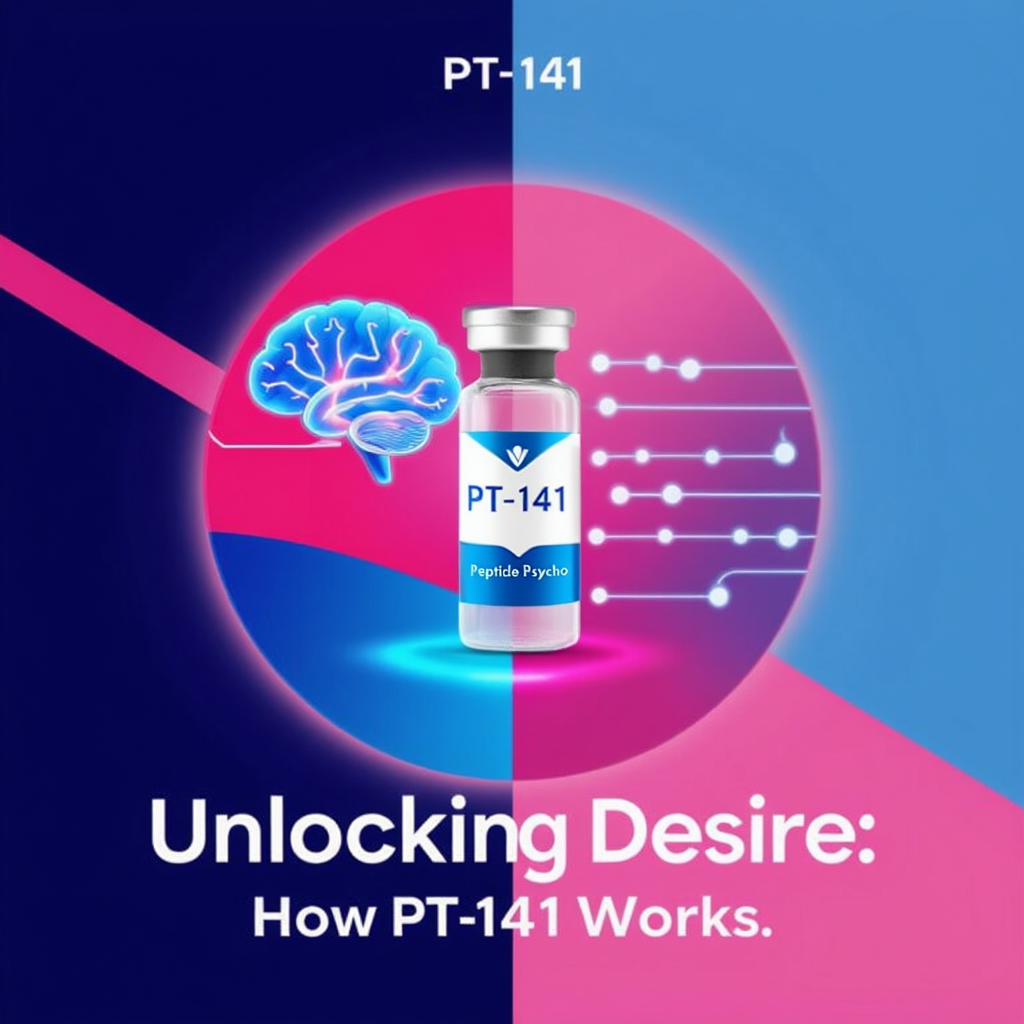
What PT-141 is approved for — and what it is not approved for.
This is where a lot of peptide pages get sloppy. PT-141/bremelanotide has an FDA-approved drug context, but that approval is narrow.
Premenopausal women with HSDD
Vyleesi is indicated for acquired, generalized hypoactive sexual desire disorder in premenopausal women when low desire causes distress and is not explained by medical, psychiatric, relationship, medication, or substance-related causes.
Men or performance enhancement
The FDA-approved Vyleesi label specifically says it is not indicated for men, postmenopausal women, or enhancement of sexual performance. Male use is usually discussed as off-label or research context.
Central arousal signaling
PT-141 is discussed because melanocortin pathways may influence sexual motivation and arousal signaling in the central nervous system.
Sexual desire is not just plumbing.

Sexual response can involve blood flow, hormones, stress, sleep, relationship factors, mood, medication effects, body image, dopamine signaling, and general health. So yes, the body decided to make this more complicated than a light switch.
PT-141 gets attention because it is not mainly a blood-flow compound. It is usually discussed around melanocortin signaling and central arousal pathways.
- Blood-flow angle: more relevant to PDE5 drugs like sildenafil and tadalafil.
- Desire/arousal angle: where PT-141 is usually discussed.
- Hormone axis angle: where compounds like Kisspeptin-10 may enter research discussions.
- Bonding/stress angle: where oxytocin is commonly discussed, though this page is not a treatment guide.
PT-141 vs blood-flow-focused options
PT-141 is often compared to common sexual-health drugs, but the comparison can be misleading because the pathway is different.
PT-141
Usually discussed for melanocortin signaling, desire, arousal, and central nervous system pathways.
PDE5 inhibitors
Usually discussed for blood flow and erectile response. More mechanical. Less “mental desire” focused.
Hormone-related compounds
Usually discussed when libido questions overlap with endocrine signaling, testosterone, estrogen, prolactin, or reproductive-axis pathways.
Other peptides commonly mentioned in libido research
PT-141 is the main peptide on this page, but it often gets discussed alongside other melanocortin, hormone-axis, and neuroendocrine compounds.
PT-141
Bremelanotide research involving melanocortin pathways associated with libido and arousal signaling.
MelanocortinMT-2 / Melanotan II
Melanocortin pathway research commonly discussed for pigmentation, appetite, and related libido-response observations.
Hormone axisKisspeptin-10
Research peptide discussed for GnRH signaling, reproductive hormone pathways, and endocrine-axis models.
NeuroendocrineOxytocin
Neuropeptide research involving bonding, intimacy, social behavior, stress response, and neuroendocrine signaling.
HormoneHCG
Gonadotropin-related research compound discussed in reproductive hormone and endocrine-axis contexts.
GuidePeptides by Category
Compare libido peptides with metabolic, recovery, GH-axis, mitochondrial, and cognitive peptide categories.
Important PT-141 considerations
PT-141 is not a casual “more desire, no downside” compound. The prescription bremelanotide label includes important warnings and limitations, especially around blood pressure, heart rate, nausea, and cardiovascular risk.
- Blood pressure: bremelanotide can temporarily increase blood pressure and reduce heart rate.
- Cardiovascular caution: it is not recommended for people at high cardiovascular risk and is contraindicated with uncontrolled hypertension.
- Nausea: nausea is one of the most commonly discussed side effects.
- Not performance enhancement: the approved drug label does not position it as a sexual-performance enhancer.
For broader sourcing and verification context, read the PepsVN guide on risks of unverified peptides in Vietnam.
Before researching PT-141, ask better questions.
A good peptide page should not just say “libido peptide” and call it a day. That is lazy. And also how the internet became the internet.
Is this a desire problem or a blood-flow problem?
PT-141 is usually discussed more around desire and arousal signaling, while PDE5 drugs are more blood-flow focused.
Is the page overstating male use?
Male use appears mostly in off-label and research discussions. It should not be written like the FDA-approved indication.
Are blood pressure risks mentioned?
If a PT-141 page ignores blood pressure, heart rate, nausea, and cardiovascular caution, it is probably too salesy.
Fair pricing, clearer information, less nonsense.
PepsVN focuses on practical peptide information for Vietnam: clear communication, reasonable pricing, research-use context, and less premium-markup theater.
Clearer categories
PT-141 belongs in libido and melanocortin research, not in a random “everything peptide” pile.
Better internal research
Use category, stacking, reconstitution, and sourcing guides to understand the broader context.
No miracle claims
If a peptide page sounds like a nightclub flyer with a lab coat, maybe keep reading elsewhere.
Read these next.
These internal links help connect this libido guide to PT-141, peptide categories, reconstitution, legal context, sourcing risk, and common PepsVN questions.
Questions about PT-141 or libido peptide research?
Message PepsVN for availability, research-use information, reconstitution math, storage questions, and help understanding how PT-141 compares with other peptide categories.
Notes & references
PepsVN provides educational and research-information content only. Nothing on this page is medical advice, legal advice, veterinary advice, dosage guidance, treatment guidance, injection instruction, sourcing instruction, purchasing instruction, or a recommendation for human or animal use. PT-141, bremelanotide, and other compounds discussed on this page may be regulated differently depending on jurisdiction. Readers are responsible for understanding and complying with applicable laws and regulations.