DSIP in Vietnam | Reconstitution, Research Dosing & Reference Pricing | PepsVN
DSIP • Vietnam • Research information

DSIP in Vietnam

DSIP, short for Delta Sleep-Inducing Peptide, is a research peptide commonly discussed for sleep regulation, stress-response models, recovery, and nervous-system signaling.

Despite the name, DSIP is not just “sleep in a vial.” Biology is rarely that polite. Researchers are interested in DSIP because it appears to interact with sleep architecture, stress hormones, and regulatory systems tied to rest and recovery.

01
Commonly researched for sleep regulation and sleep-architecture models.
02
Frequently discussed for stress-response and nervous-system research.
03
Often paired in recovery-focused protocols with peptides like BPC-157, Ipamorelin, and MOTS-c.
DSIP peptide vial
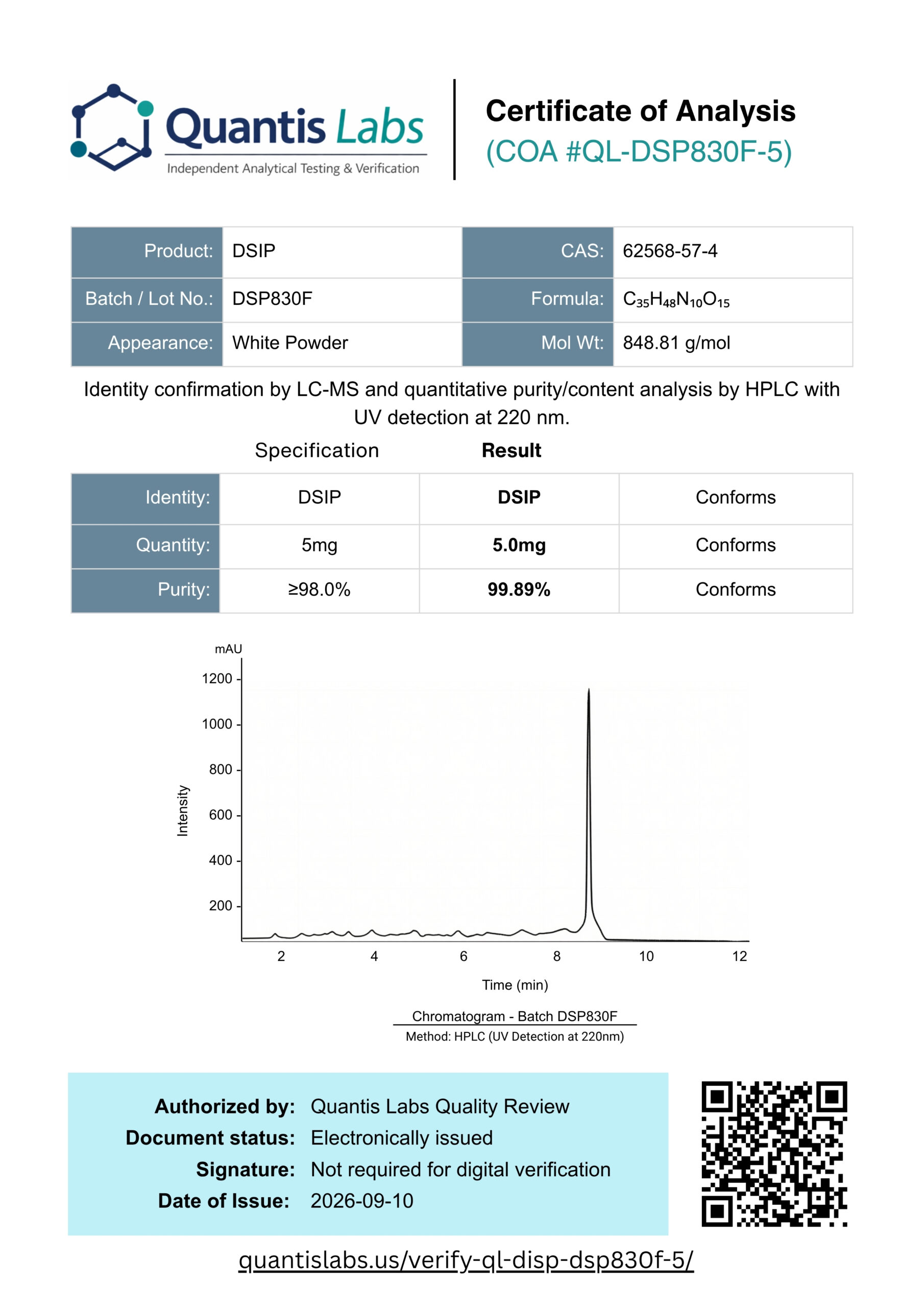
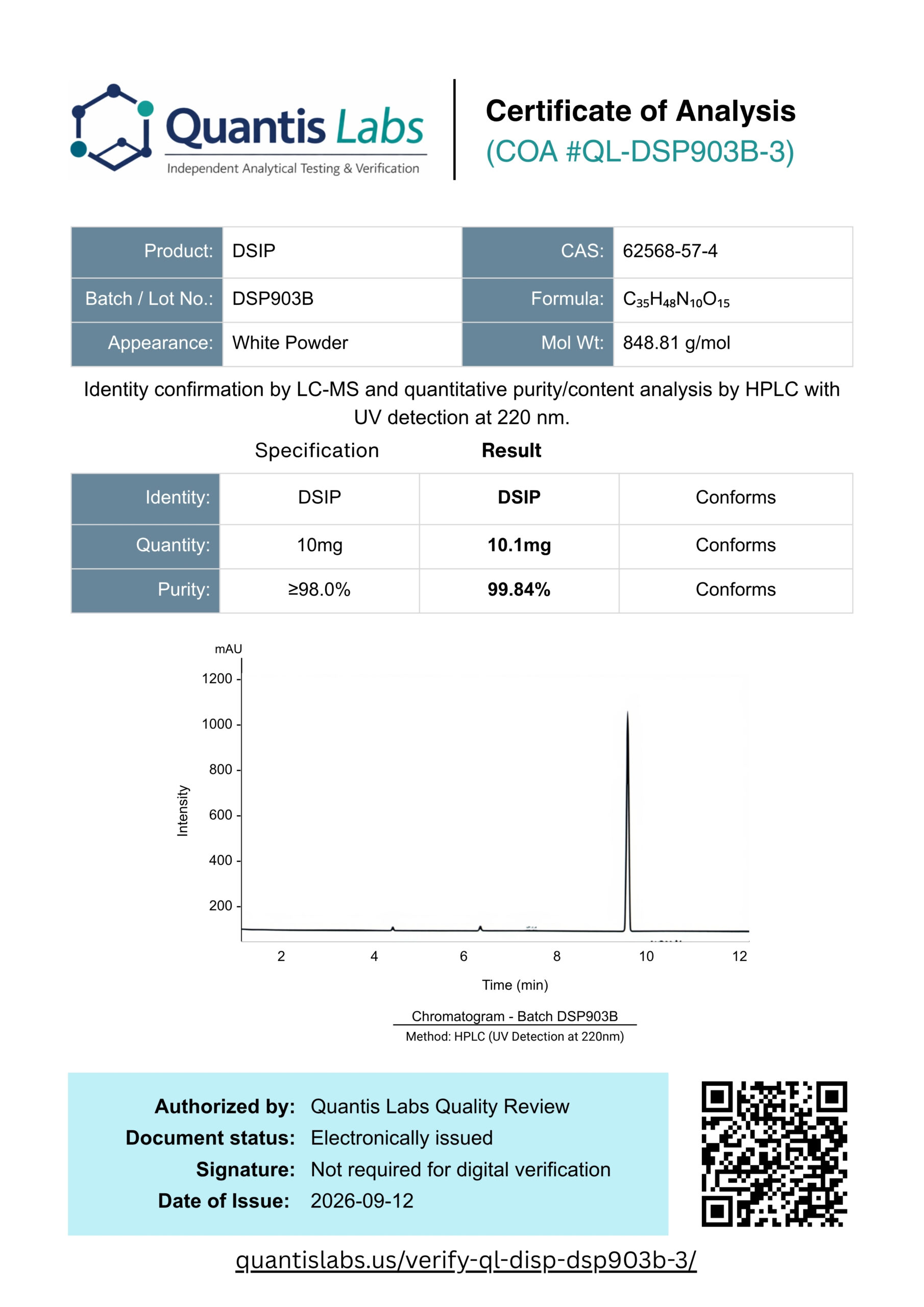
Scan to view COA
DSIP COA QR code
Research Overview

Why researchers are interested in DSIP

DSIP became interesting because of its relationship to sleep, stress regulation, and neuroendocrine signaling. Research discussions often focus on whether DSIP may influence sleep quality, sleep stages, recovery, and the body’s response to stress.

01

Sleep architecture

DSIP is most often discussed for its relationship to sleep stages, especially deep sleep and delta-wave activity.

02

Stress-response research

Researchers discuss DSIP for possible interactions with stress hormones and nervous-system regulation.

03

Recovery models

Because sleep is closely tied to recovery, DSIP is often included in broader rest, repair, and regeneration discussions.

Reference Pricing

Common DSIP research formats in Vietnam

Pricing below is listed as Vietnam reference pricing for research-use formats. Availability, batch verification, and sourcing may vary.

DSIP

2mg vial
$20 500,000₫

BAC Water

10mL vial
$5 125,000₫
Common Research Protocols

Common DSIP research-dose discussions

Research discussions vary widely. DSIP is typically discussed in microgram ranges, often in evening or sleep-window research contexts.

Research Focus Commonly Discussed Range Notes
Conservative sleep research 100-200mcg Often discussed as a lower research range.
Sleep-quality research 200-300mcg Commonly discussed in sleep and recovery models.
Higher-dose discussions 300-500mcg More aggressive research discussion range. Not something to treat casually.
These examples represent research-community discussions only and should not be interpreted as medical guidance.
Reconstitution Examples

DSIP calculations with 1mL or 2mL BAC water

These examples use a standard U100 insulin syringe where 100 units equals 1mL. For a 2mg DSIP vial, both 1mL and 2mL are practical options.

2mg vial + 1mL BAC water

Dose Units Approx. Vial Duration
100mcg5 units20 doses
200mcg10 units10 doses
300mcg15 units6-7 doses
500mcg25 units4 doses
With 1mL added to a 2mg vial, each unit equals 20mcg.

2mg vial + 2mL BAC water

Dose Units Approx. Vial Duration
100mcg10 units20 doses
200mcg20 units10 doses
300mcg30 units6-7 doses
500mcg50 units4 doses
With 2mL added to a 2mg vial, each unit equals 10mcg.

1mL or 2mL?

For DSIP, 1mL keeps injection volume smaller and the math simple. 2mL gives larger syringe measurements, which can make smaller doses easier to see. If someone struggles reading tiny syringe marks, 2mL is usually the less annoying option.

Need different calculations?

Use the PepsVN peptide calculator to calculate any vial size, BAC water amount, dose, or syringe-unit measurement.

Common Stacks

What researchers often discuss alongside DSIP

DSIP is usually discussed in sleep, recovery, and nervous-system research contexts. Because sleep affects basically everything, DSIP often appears in broader recovery stacks.

DSIP + CJC/Ipamorelin

CJC-1295 + Ipamorelin is discussed for growth-hormone pulse research, while DSIP is discussed for sleep and nervous-system regulation.

DSIP + BPC-157

BPC-157 is commonly discussed for tissue-repair models. DSIP may be included in recovery discussions because sleep is part of the repair equation.

DSIP + MOTS-c

MOTS-c is often discussed for mitochondrial and energy research. DSIP fits more on the recovery and rest side of the conversation.

Mechanism

How DSIP is believed to work

DSIP is a strange one. The name makes it sound simple: Delta Sleep-Inducing Peptide. Case closed, right? Not exactly. Sleep biology is complicated, because apparently the body needed another area where nothing is straightforward.

What does “delta sleep” mean?

Delta sleep refers to deep, slow-wave sleep. This is the sleep stage often associated with physical restoration, recovery, and feeling actually rested instead of just technically unconscious for eight hours.

DSIP was named because it was originally associated with delta-wave sleep activity.

Sleep regulation research

DSIP is studied for its possible role in sleep architecture, meaning how sleep is organized across different stages.

Researchers are interested in whether DSIP may influence the balance between light sleep, deep sleep, and recovery-related sleep patterns.

Stress hormone interaction

Some DSIP discussions involve stress-response systems, including cortisol and neuroendocrine regulation.

The basic idea is that sleep and stress are tightly connected. If the stress system stays too active, sleep quality usually suffers. Shocking news to anyone who has ever tried sleeping while worrying about everything at 2 a.m.

Nervous-system signaling

DSIP is also discussed for broader nervous-system regulation. It may interact with systems involved in relaxation, pain perception, and autonomic balance.

This is why research conversations often place DSIP somewhere between sleep peptide, stress peptide, and recovery peptide.

Why results can vary

Sleep is affected by caffeine, stress, light exposure, hormones, blood sugar, timing, and about 900 other things the body refuses to put in a simple spreadsheet.

Because of that, DSIP research discussions can be inconsistent. The same compound may look very different depending on the sleep model being studied.

Why recovery gets discussed

Recovery does not happen well without sleep. Muscle repair, hormone signaling, immune activity, and nervous-system regulation all depend heavily on sleep quality.

DSIP is not discussed as a direct repair peptide like BPC-157. It is more often discussed as a possible support compound in rest-and-recovery research models.

Research Status

What researchers actually know so far

DSIP remains an experimental research peptide and is not approved as a medical treatment for human use.

It is widely discussed in research communities because of its possible relationship to sleep architecture, stress-response signaling, and nervous-system regulation.

The science is interesting, but sleep is complicated. Anyone promising a guaranteed “perfect sleep peptide” is probably overselling the nap.

Disclaimer:

All products and information referenced on this page are intended strictly for research purposes only. DSIP is an experimental research peptide and is not presented as a medical treatment. Nothing on this page is medical advice, diagnosis, treatment guidance, or a recommendation for human or animal use. The purchase, possession, sale, or use of research compounds may be restricted or illegal in some jurisdictions. Readers are responsible for complying with local laws and regulations.
```