
PT-141 in Vietnam
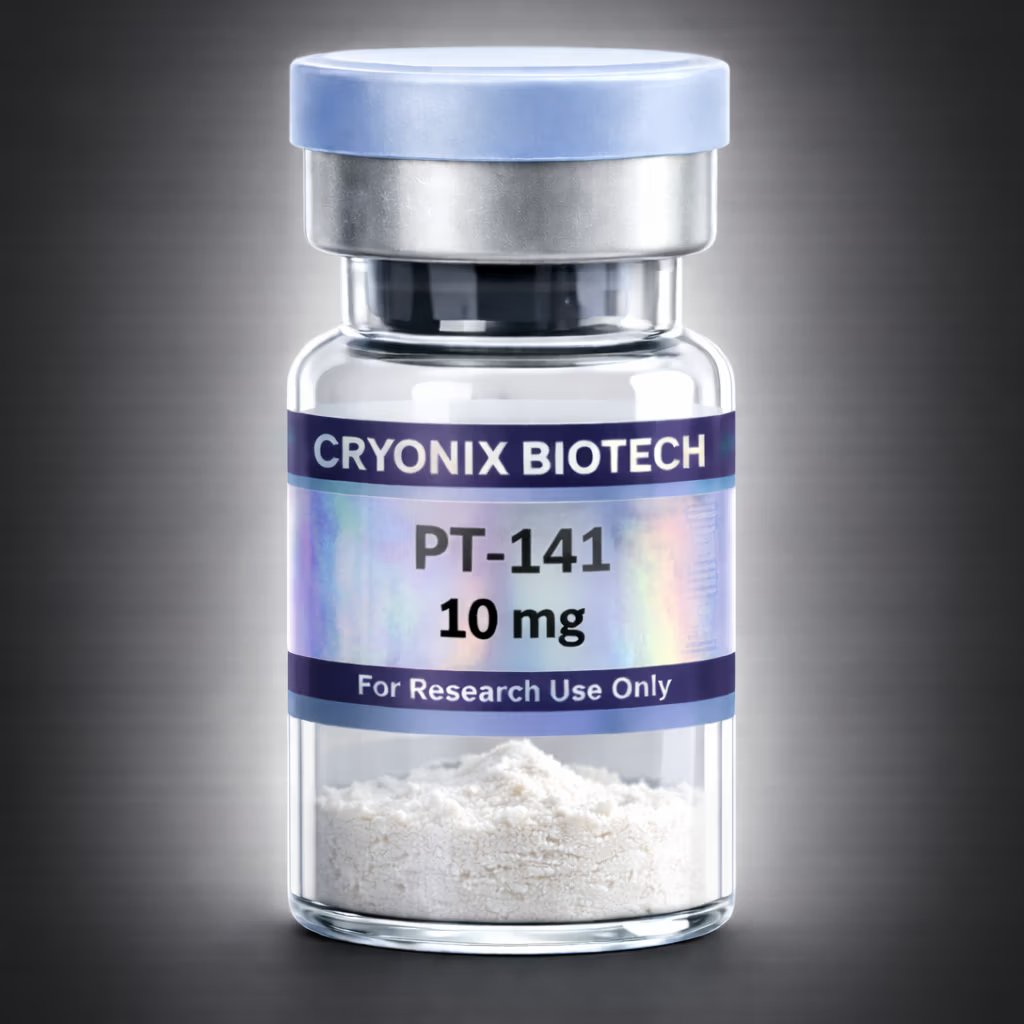
PT-141, also known as Bremelanotide, is a melanocortin peptide commonly researched for sexual-function pathways, libido signaling, central nervous system activity, and melanocortin receptor biology.
PT-141 is related to the same melanocortin research family as MT-2, but it is not mainly discussed as a tanning peptide. Researchers are much more interested in how it affects central sexual signaling. In simple terms, PT-141 is less “skin pigment” and more “brain pathway.”

Why researchers are interested in PT-141
PT-141 is studied because it activates melanocortin pathways involved in sexual arousal, libido signaling, and central nervous system response. Unlike compounds that primarily affect blood flow, PT-141 is usually discussed for brain-driven sexual signaling.
Central sexual signaling
PT-141 is researched for its effect on central nervous system pathways involved in sexual arousal and desire.
Melanocortin receptors
Researchers study PT-141 because it interacts with melanocortin receptors, especially pathways linked to sexual-function signaling.
Different from ED drugs
PT-141 is often compared with blood-flow-focused compounds, but its primary research interest is central signaling rather than vascular mechanics.
Common PT-141 research formats in Vietnam
Pricing below is listed as Vietnam reference pricing for research-use formats. Availability, batch verification, and sourcing may vary.
PT-141
BAC Water
Common PT-141 research-dose discussions
PT-141 is usually discussed in microgram-to-low-milligram ranges. Research conversations often focus on central sexual-function signaling, timing, side-effect tolerance, and individual response.
| Research Focus | Commonly Discussed Range | Notes |
|---|---|---|
| Introductory research | 250-500mcg | Often discussed as a cautious starting range. |
| Common response research | 500mcg-1mg | Frequently discussed in sexual-function research contexts. |
| Higher-dose discussions | 1-2mg | More aggressive research discussions. Side effects such as nausea can become more noticeable. |
PT-141 calculations with 2mL or 3mL BAC water
These examples use a standard U100 insulin syringe where 100 units equals 1mL. For a 10mg PT-141 vial, 2mL gives clean math, while 3mL gives slightly larger syringe measurements.
10mg vial + 2mL BAC water
| Dose | Units | Approx. Vial Duration |
|---|---|---|
| 250mcg | 5 units | 40 doses |
| 500mcg | 10 units | 20 doses |
| 1mg | 20 units | 10 doses |
| 2mg | 40 units | 5 doses |
10mg vial + 3mL BAC water
| Dose | Units | Approx. Vial Duration |
|---|---|---|
| 250mcg | 7.5 units | 40 doses |
| 500mcg | 15 units | 20 doses |
| 1mg | 30 units | 10 doses |
| 2mg | 60 units | 5 doses |
2mL or 3mL?
For PT-141, 2mL usually gives the cleanest math: 500mcg equals 10 units and 1mg equals 20 units. 3mL gives larger syringe measurements, but the math is slightly less tidy. Either works well.
Need different calculations?
Use the PepsVN peptide calculator to calculate any vial size, BAC water amount, dose, or syringe-unit measurement.
How PT-141 differs from blood-flow-focused compounds
PT-141 is often discussed alongside ED medications, but the research mechanism is different. Blood-flow drugs mainly affect vascular mechanics. PT-141 is researched for central nervous system signaling.
| Blood-flow-focused compounds | PT-141 |
|---|---|
| Mainly act on vascular blood flow | Acts through melanocortin receptor pathways |
| Often require physical/sexual stimulation | Researched for central arousal and libido signaling |
| Primarily mechanical/vascular effect | Primarily brain and nervous-system signaling interest |
| Usually discussed for erectile response | Discussed for libido and arousal pathways in both male and female research |
How PT-141 differs from Melanotan 2
PT-141 and MT-2 are related because both come from melanocortin research, but they are usually discussed for different primary purposes.
| MT-2 | PT-141 |
|---|---|
| Primarily discussed for pigmentation and tanning-response research | Primarily discussed for sexual-function and libido research |
| More noticeable skin-pigment activity | Less tanning-focused, more central signaling focused |
| Interacts with melanocortin pathways including pigment and appetite signaling | Interacts with melanocortin pathways involved in arousal and libido signaling |
| Often discussed with UV and pigmentation changes | Often discussed with timing, nausea, flushing, and libido response |
What researchers often discuss alongside PT-141
PT-141 is usually discussed by itself because response, timing, and tolerance vary widely. Still, it is often compared with other compounds involved in sexual-function and hormone-axis research.
PT-141 + Kisspeptin-10
Kisspeptin-10 is discussed for reproductive hormone-axis signaling, while PT-141 is discussed for central sexual-function pathways.
PT-141 + MT-2 comparisons
MT-2 is usually pigmentation-focused, while PT-141 is more sexual-function focused. Both belong to the melanocortin research family.
PT-141 + hormone research
PT-141 is often discussed alongside broader hormone-axis research because libido and sexual function are influenced by both brain signaling and hormones.
How PT-141 is believed to work
PT-141 is best understood as a melanocortin receptor agonist. That means it interacts with receptor pathways involved in central nervous system signaling, including sexual arousal and libido-related pathways.
Melanocortin receptor activity
PT-141 interacts with melanocortin receptors, especially pathways associated with central nervous system arousal signaling.
These receptors are part of a broader signaling system involved in pigmentation, appetite, inflammation, and sexual function.
Central nervous system signaling
Unlike blood-flow-focused compounds, PT-141 is researched for activity in central sexual signaling.
In plain English, researchers are interested in how it may affect desire and arousal signals from the brain rather than just increasing blood flow.
Male and female research interest
PT-141 is discussed in both male and female sexual-function research because melanocortin signaling is not limited to one sex.
That is one reason researchers became interested in it beyond standard ED-drug comparisons.
Timing and response variation
PT-141 discussions often mention timing because central signaling effects may not be immediate.
Response can vary substantially between individuals, which is why research discussions often emphasize cautious dose exploration and patience rather than “take it and expect fireworks in ten minutes.”
Why nausea gets discussed
Nausea and flushing are commonly mentioned in PT-141 discussions because melanocortin receptors influence multiple systems.
The receptor pathway is not a single-purpose button. Push it and more than one system may answer.
Why it is not just an ED compound
PT-141 is often wrongly simplified as an ED peptide.
A better explanation is that it is researched for libido and arousal signaling. That may overlap with erectile response, but the core mechanism is different from vascular ED medications.
PT-141 research requires careful dosing discussions
PT-141 can be very dose-sensitive. More is not automatically better, and side effects can increase quickly in higher-dose discussions.
Nausea and flushing
Nausea, flushing, warmth, and facial redness are commonly discussed with PT-141 because melanocortin receptors affect multiple systems.
Blood pressure discussions
PT-141 research discussions sometimes mention blood pressure changes, so cardiovascular context matters in any serious research conversation.
Timing variability
PT-141 is often discussed as having delayed timing compared with blood-flow-focused compounds. Response timing can vary widely.
Not a casual compound
Because PT-141 works through central signaling pathways, it should not be treated like a simple “performance booster.” The mechanism is more complex than that.
What researchers actually know so far
PT-141 / Bremelanotide is widely studied because of its relationship to melanocortin receptor signaling and sexual-function pathways.
Its research interest is different from standard blood-flow-focused compounds because PT-141 is primarily discussed for central nervous system arousal and libido signaling.
It should still be treated carefully. Any compound affecting central signaling and melanocortin pathways deserves more respect than “just take a bigger dose.”
All products and information referenced on this page are intended strictly for research purposes only. PT-141 / Bremelanotide is a research peptide and is not presented as a medical treatment, sexual-function treatment, hormone therapy, or therapeutic recommendation. Nothing on this page is medical advice, diagnosis, treatment guidance, or a recommendation for human or animal use. The purchase, possession, sale, or use of research compounds may be restricted or illegal in some jurisdictions. Readers are responsible for complying with local laws and regulations.