Glutathione • Vietnam • Research information

Glutathione in Vietnam

Glutathione is one of the body’s most important antioxidant molecules. It is commonly researched for oxidative stress, liver detoxification pathways, mitochondrial function, immune signaling, and skin-related discussions.

It is not technically a trendy “new peptide.” It is more like one of the body’s internal cleanup systems. Less flashy than GLP-1s, but probably doing more work behind the scenes than most people realize.

01
Commonly researched for antioxidant defense and oxidative-stress models.
02
Frequently discussed for liver support, detoxification pathways, and mitochondrial health.
03
Often discussed in skin-brightening and cellular-repair research.
Glutathione vial
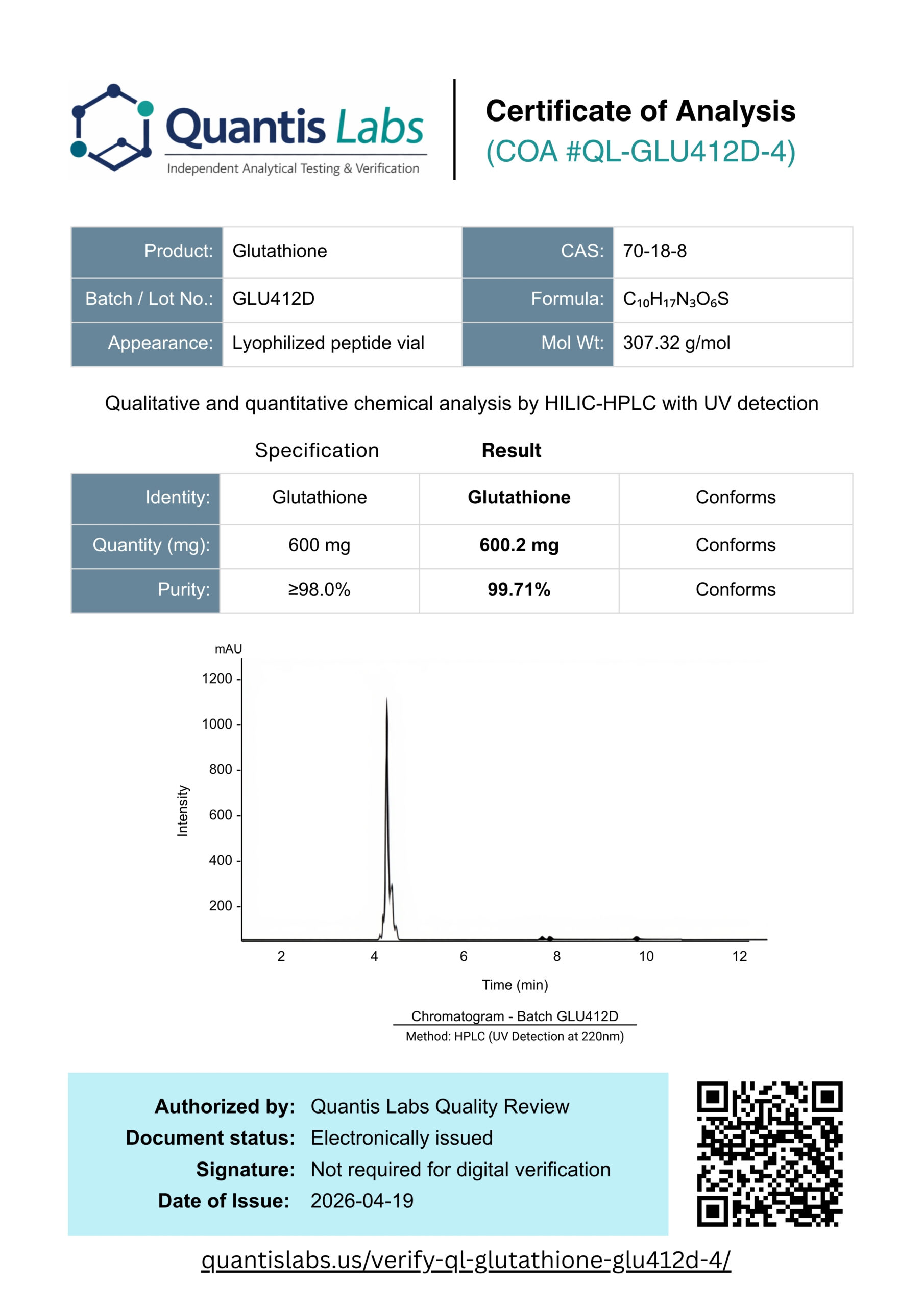
Scan to view COA
Glutathione COA QR code
Research Overview

Why researchers are interested in Glutathione

Glutathione is often called the body’s “master antioxidant,” which sounds dramatic, but it is not completely wrong. Researchers study it because it plays a central role in protecting cells from oxidative stress and helping the body manage toxic byproducts of normal metabolism.

01

Oxidative stress

Glutathione helps neutralize reactive oxygen species, which are unstable molecules that can damage cells when they build up.

02

Liver detox pathways

The liver relies heavily on glutathione for detoxification reactions, especially when processing metabolic waste, alcohol, medications, and environmental toxins.

03

Skin research

Glutathione is widely discussed in Asia for skin-brightening research because it may influence melanin pathways and oxidative stress in skin cells.

Reference Pricing

Common Glutathione research formats in Vietnam

Pricing below is listed as Vietnam reference pricing for research-use formats. Availability, batch verification, and sourcing may vary.

Glutathione

600mg vial
$20 500,000₫

BAC Water

10mL vial
$5 125,000₫
Common Research Protocols

Common Glutathione research-dose discussions

Glutathione is usually discussed in much larger milligram amounts than most peptides. Research discussions vary widely, especially depending on whether the focus is oxidative stress, liver pathways, or skin-related research.

Research Focus Commonly Discussed Range Notes
General antioxidant research 200-300mg Often discussed as a moderate research range.
Liver and detox-pathway research 300-600mg Commonly discussed where oxidative burden is the main research focus.
Skin-related research 600mg+ Frequently discussed in cosmetic and pigmentation-related research contexts.
These examples represent research-community discussions only and should not be interpreted as medical guidance.
Reconstitution Examples

Glutathione calculations with 3mL or 5mL sterile water

These examples use a standard U100 insulin syringe where 100 units equals 1mL. Because Glutathione vials are much larger than typical peptide vials, higher water volumes are usually more practical.

600mg vial + 3mL water

Dose Volume Approx. Vial Duration
100mg0.5mL / 50 units6 doses
200mg1mL / 100 units3 doses
300mg1.5mL / 150 units2 doses
600mg3mL / 300 units1 dose
With 3mL added to a 600mg vial, each 1mL contains 200mg.

600mg vial + 5mL water

Dose Volume Approx. Vial Duration
100mg0.83mL / 83 units6 doses
200mg1.67mL / 167 units3 doses
300mg2.5mL / 250 units2 doses
600mg5mL / 500 units1 dose
With 5mL added to a 600mg vial, each 1mL contains 120mg.

Important note on water choice

Glutathione is commonly discussed with sterile water rather than standard BAC water, depending on the formulation and research setup. Always follow the specific product documentation and use appropriate sterile handling. This is not the place to freestyle like you are making soup.

Need different calculations?

Use the PepsVN peptide calculator to calculate any vial size, water amount, dose, or syringe-unit measurement.

Oral vs Injectable

Why Glutathione delivery method matters

Glutathione is available in many formats, including oral capsules, sublingual products, liposomal formulas, IV preparations, and injectable research formats. The delivery method matters because absorption is not the same across all forms.

Oral glutathione

Oral glutathione is convenient, but absorption has historically been debated because glutathione can be broken down in the digestive tract.

Liposomal and sublingual formats are often discussed because they may improve absorption compared with standard capsules. Convenient? Yes. Always predictable? Not exactly.

Injectable and IV research

Injectable and IV formats are discussed because they bypass the digestive tract and may provide more direct exposure.

This is one reason Glutathione is commonly seen in clinical and cosmetic wellness settings, especially in countries where IV wellness clinics are common.

NAC vs Glutathione

NAC, or N-acetylcysteine, is often discussed because it supplies cysteine, one of the building blocks the body uses to make glutathione.

In simple terms, NAC helps provide raw material. Glutathione is the finished molecule. Both are interesting, but they are not the same thing.

Why bioavailability is tricky

Glutathione status depends on absorption, cellular transport, recycling systems, oxidative stress load, liver function, and nutrient availability.

So when someone says “this form is best,” the honest answer is usually: best for what, compared to what, and measured how? Annoying question, but useful.

Skin Research

Why Glutathione is discussed for skin brightening

Glutathione is especially popular in Asia for skin-brightening discussions. The science centers on melanin pathways, oxidative stress, and the balance between different types of pigment production.

Melanin pathway research

Skin color is influenced by melanin production. Glutathione is discussed because it may influence the balance between eumelanin, the darker brown-black pigment, and pheomelanin, the lighter red-yellow pigment.

This does not mean it magically “bleaches” skin. That is the internet being dramatic again. It means researchers are interested in how antioxidant status may influence pigment pathways.

Oxidative stress and skin

Oxidative stress contributes to visible skin aging, uneven tone, and damage from UV exposure and environmental stressors.

Because glutathione is central to antioxidant defense, researchers often discuss it in skin-health and cosmetic-aging contexts.

Common Stacks

What researchers often discuss alongside Glutathione

Glutathione is often discussed with compounds that relate to oxidative stress, mitochondrial function, cellular energy, liver pathways, and skin repair.

Glutathione + NAD+

NAD+ is discussed for cellular energy and mitochondrial research, while Glutathione is discussed for antioxidant defense and oxidative stress management.

Glutathione + SS-31

SS-31 is often discussed for mitochondrial research. Pairing it with Glutathione creates a broader antioxidant and mitochondrial-support research discussion.

Glutathione + GHK-Cu

GHK-Cu is discussed for skin, collagen, and repair pathways, while Glutathione is commonly discussed for oxidative stress and skin-brightening research.

Mechanism

How Glutathione works in the body

Glutathione is not just a supplement buzzword. It is a molecule your cells constantly use to defend themselves from oxidative stress, recycle antioxidants, and support detoxification chemistry. Basically, it is part of the body’s cleanup crew, and the cleanup crew is busy.

What is Glutathione?

Glutathione is a tripeptide made from three amino acids: cysteine, glutamate, and glycine.

It exists in cells mainly in two forms: reduced glutathione, which is active and ready to neutralize oxidative stress, and oxidized glutathione, which has already done its job and needs recycling.

Antioxidant defense

Cells produce reactive oxygen species during normal metabolism. In small amounts, they are part of normal signaling. In excess, they can damage proteins, lipids, mitochondria, and DNA.

Glutathione helps neutralize these reactive molecules before they turn cellular housekeeping into a demolition project.

Liver detoxification

The liver uses glutathione in phase II detoxification, especially conjugation reactions that help make certain toxins and metabolic byproducts easier to eliminate.

This is why glutathione is so often discussed in liver, alcohol, medication-metabolism, and environmental-toxin research.

Mitochondrial protection

Mitochondria produce energy, but they also generate oxidative byproducts. That makes antioxidant defense especially important inside and around mitochondria.

Glutathione is involved in protecting mitochondrial function from oxidative damage, which is one reason it often appears in energy and longevity research discussions.

Immune signaling

Immune cells rely on redox balance to function properly. Too much oxidative stress can interfere with normal immune signaling.

Researchers discuss glutathione because it may help maintain the cellular environment immune cells need to respond properly without burning the whole kitchen down.

Why levels can drop

Glutathione levels may be affected by aging, stress, alcohol, poor sleep, inflammation, illness, toxin exposure, and nutrient status.

In other words, almost everything fun or stressful seems to make the body use more of it. Very convenient design.

Research Status

What researchers actually know so far

Glutathione is a naturally occurring molecule in the body and is widely studied for antioxidant defense, liver detoxification pathways, mitochondrial function, immune signaling, and skin-related research.

However, different delivery methods have different absorption and exposure profiles. Oral, liposomal, injectable, and IV formats should not be treated as interchangeable just because the label says “glutathione.”

The science is substantial, but the marketing can get ridiculous quickly, especially around skin whitening and “detox” claims.

Disclaimer:

All products and information referenced on this page are intended strictly for research purposes only. Glutathione is not presented as a medical treatment, cosmetic treatment, skin-whitening treatment, or therapeutic recommendation. Nothing on this page is medical advice, diagnosis, treatment guidance, or a recommendation for human or animal use. The purchase, possession, sale, or use of research compounds may be restricted or illegal in some jurisdictions. Readers are responsible for complying with local laws and regulations.